Select a photograph to enlarge it.
Before the streetcars and ferry rides in New Orleans, there was a drive through Alabama with a colleague from Brazil. Birmingham, Montgomery and Mobile each gave us a reason to stop. By the time I looked back through the pictures in the hotel, the previous day already felt much farther away.
Birmingham: dinner and the tower
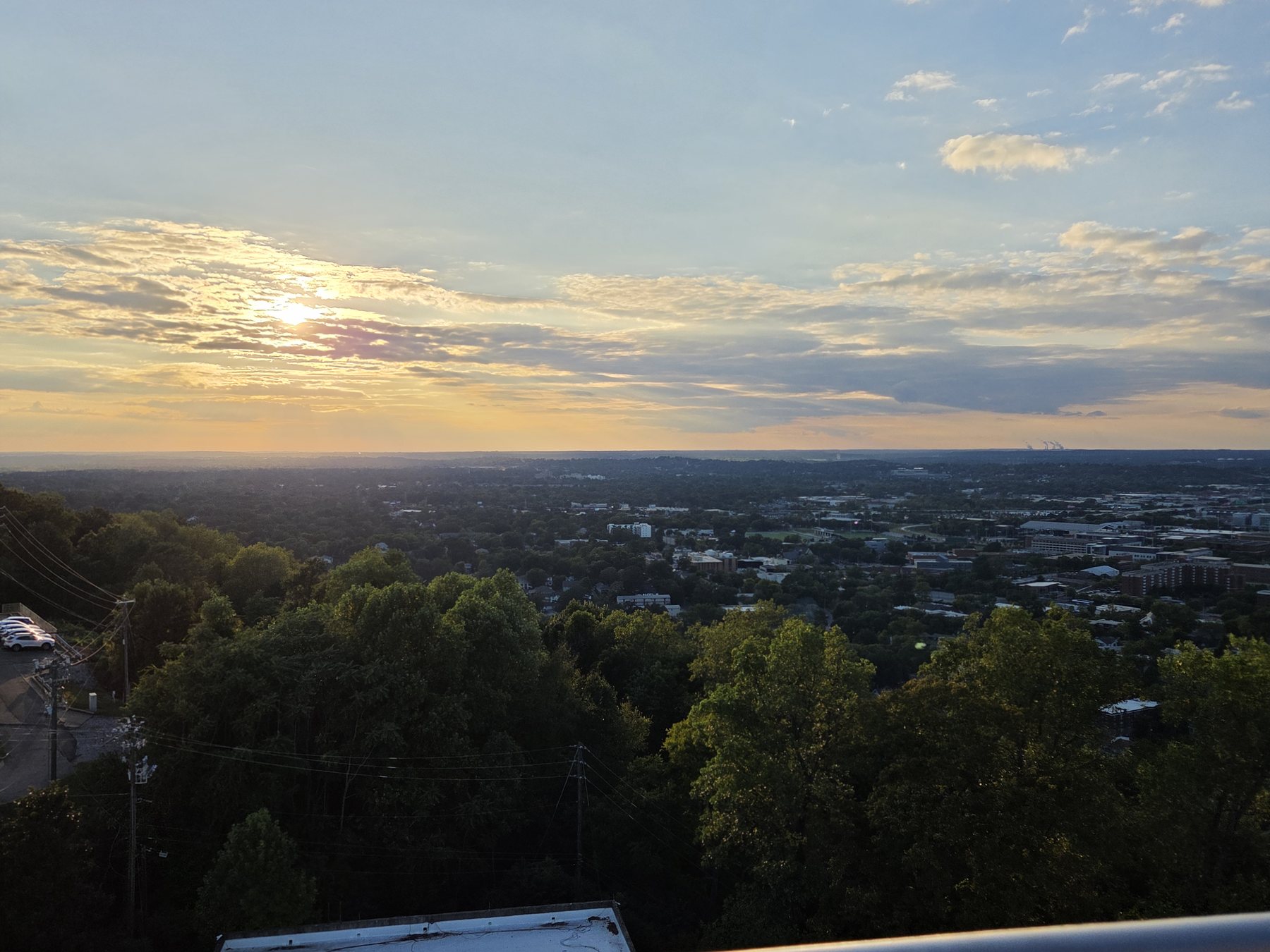
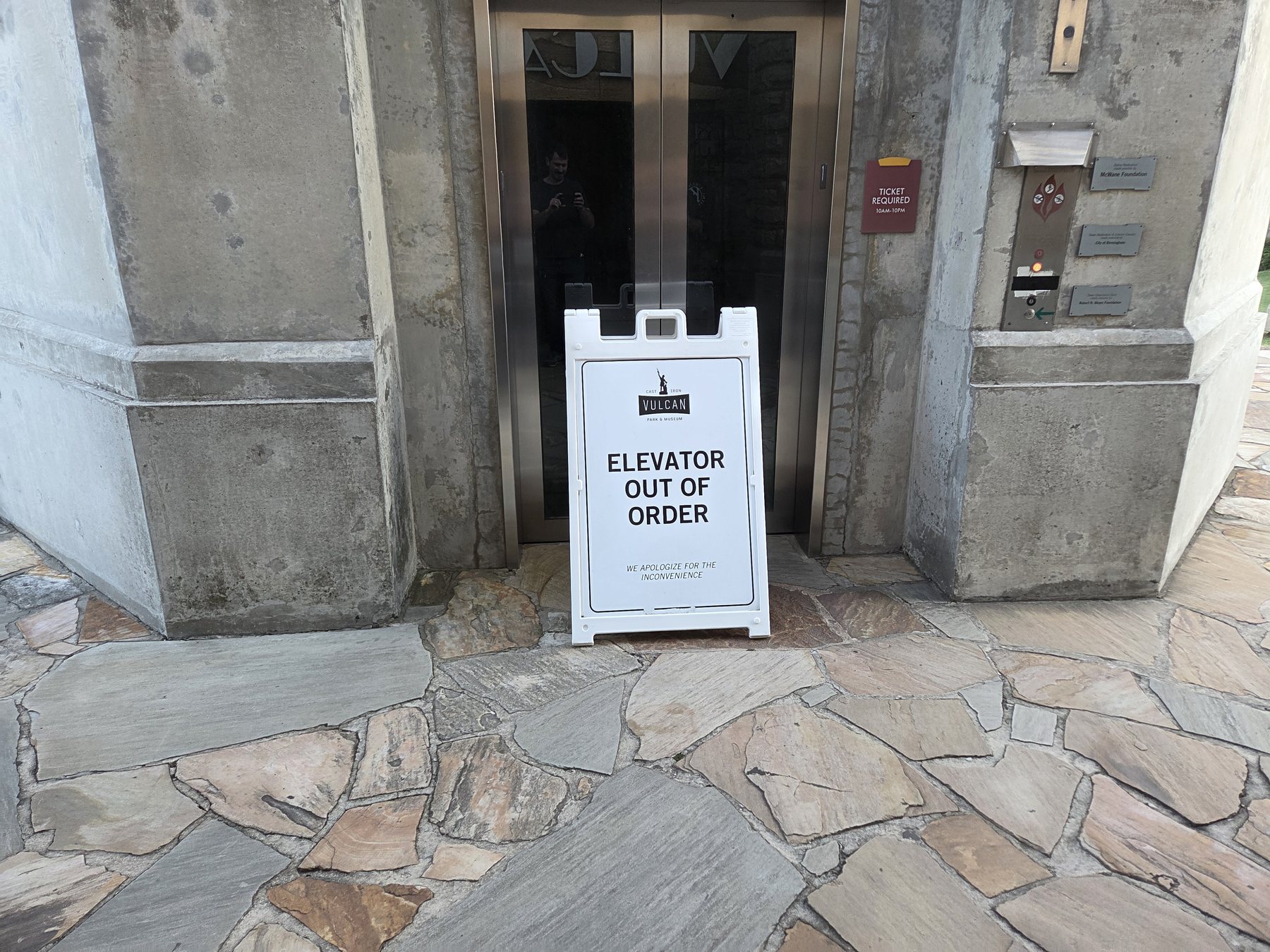
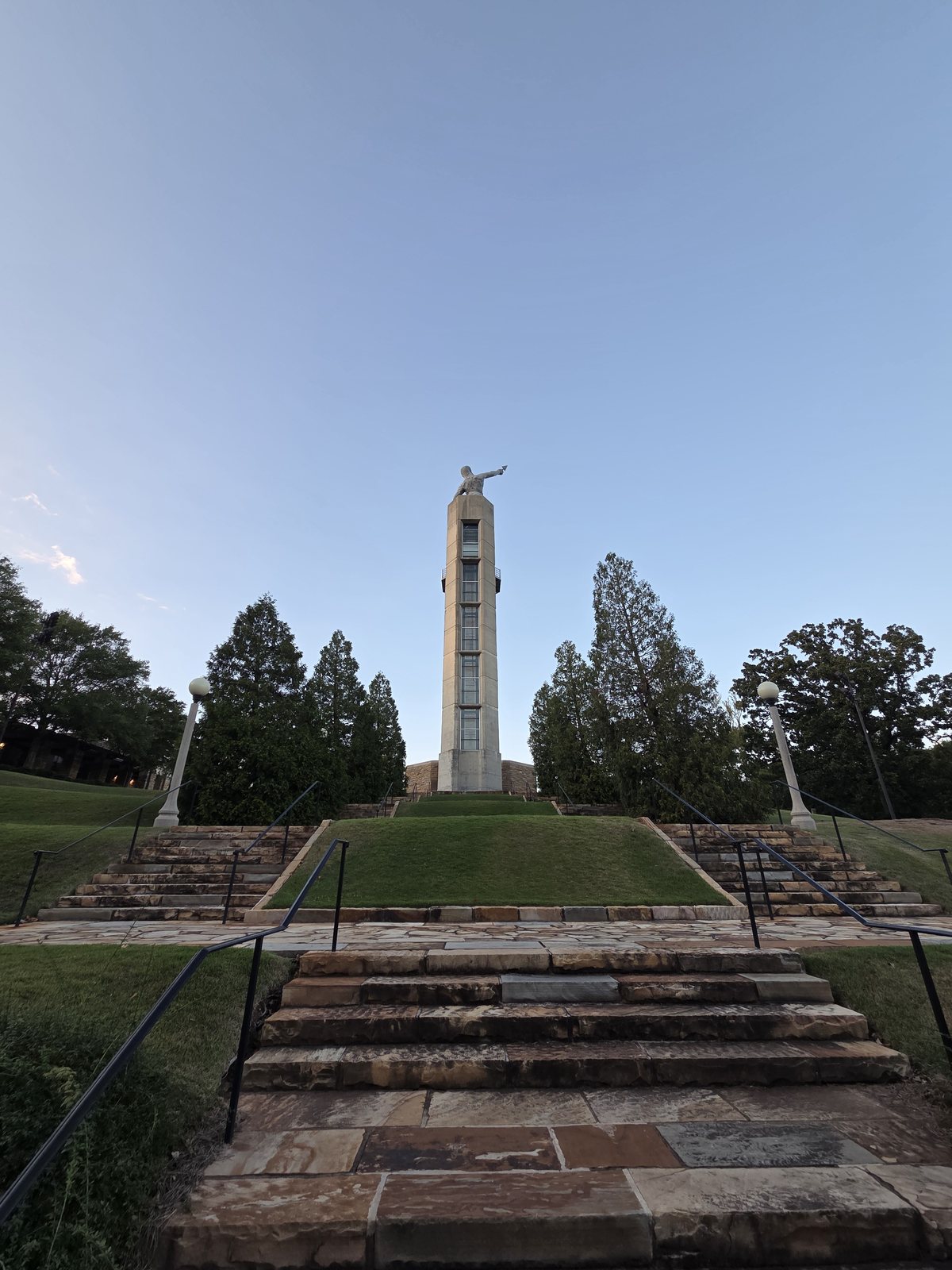
In Birmingham, we went to Vulcan. The elevator was closed, so we took the stairs up the tower. There were views out over Birmingham, the statue and the moon. I wished my night photographs had turned out better, but I had pictures from the top and of us making our way up.
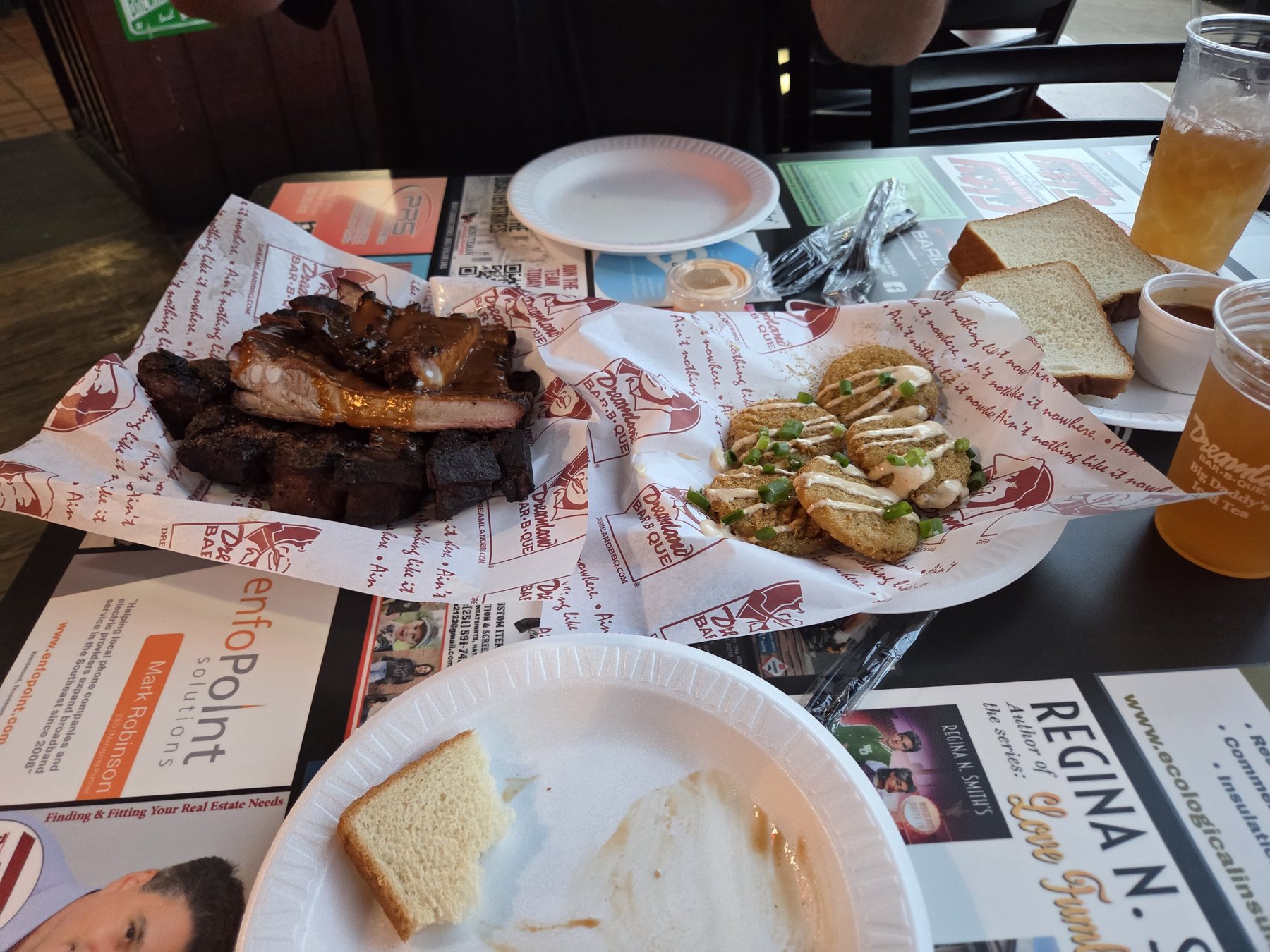
We also split ribs and fried green tomatoes at Dreamland.
Montgomery: a conversation with another perspective
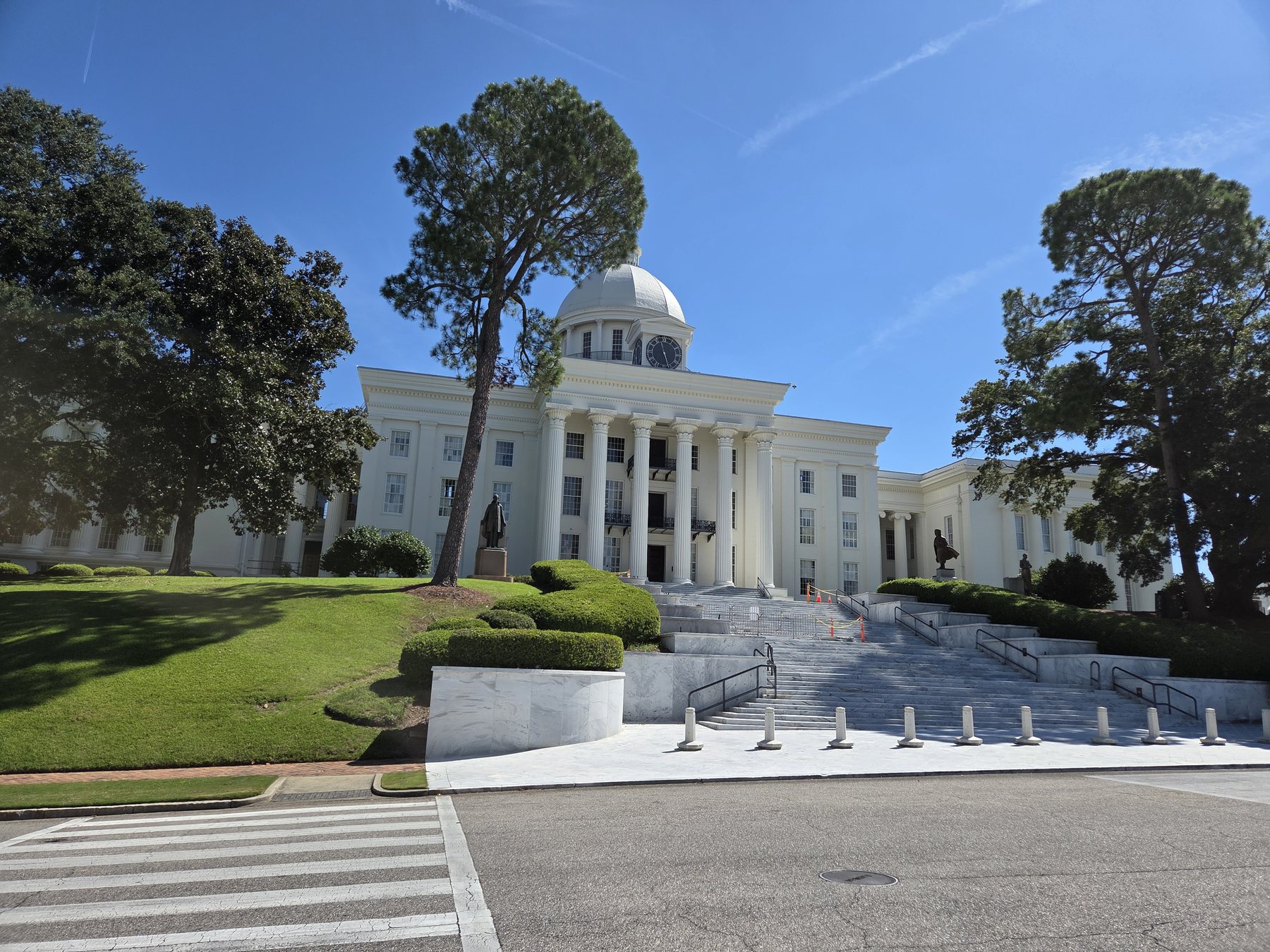
Montgomery brought a different kind of stop. We spent time around the state capitol and went to the First White House of the Confederacy. Some of the history raised questions I wanted to understand better.
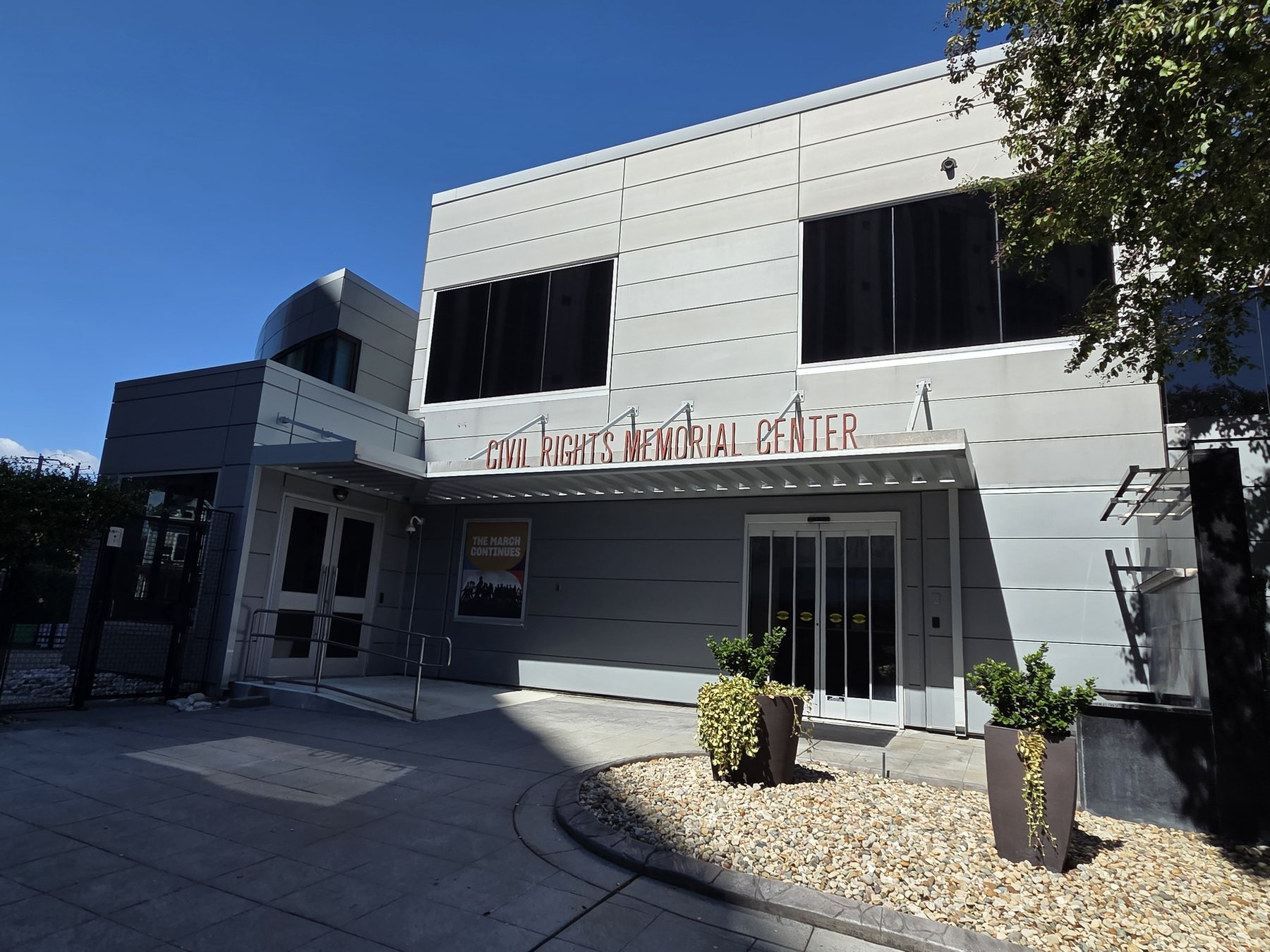
At the First White House, the host and my colleague got into a conversation about people from the Confederacy who had moved to the region of Brazil where he was from. Cotton came into the discussion. He brought his knowledge of Brazil to it, and the host gave us postcards before we left. Traveling with someone from another country gave that conversation a direction I would not have reached on my own.
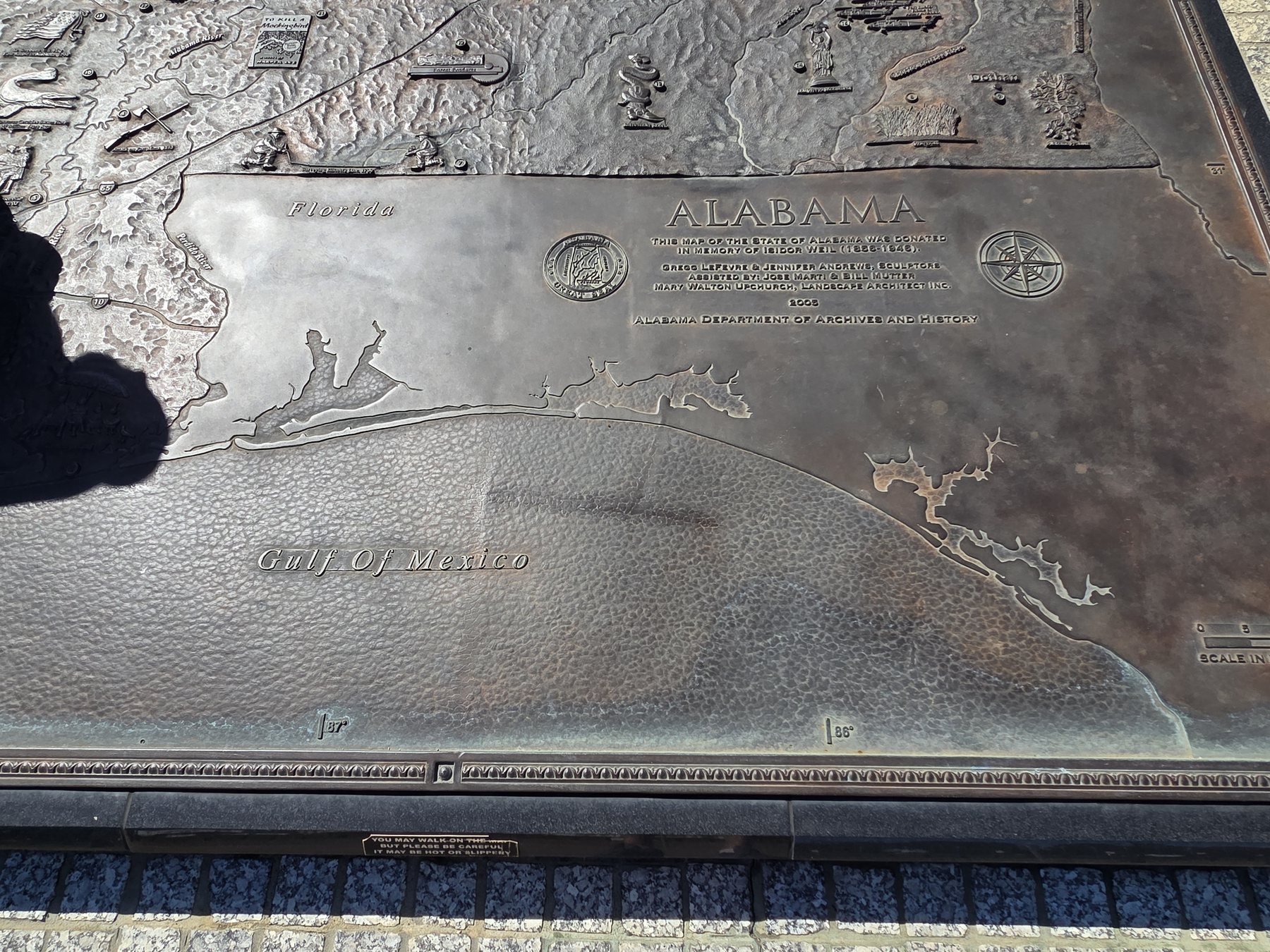
Another object that stayed with me was a large map of Alabama showing different parts of the state and what they were known for. It looked like cast iron. I took pictures because I wanted to come back to it. The buildings and monuments had their own stories; the map offered another way to look at the state we were crossing.
Mobile: lunch beside the marsh
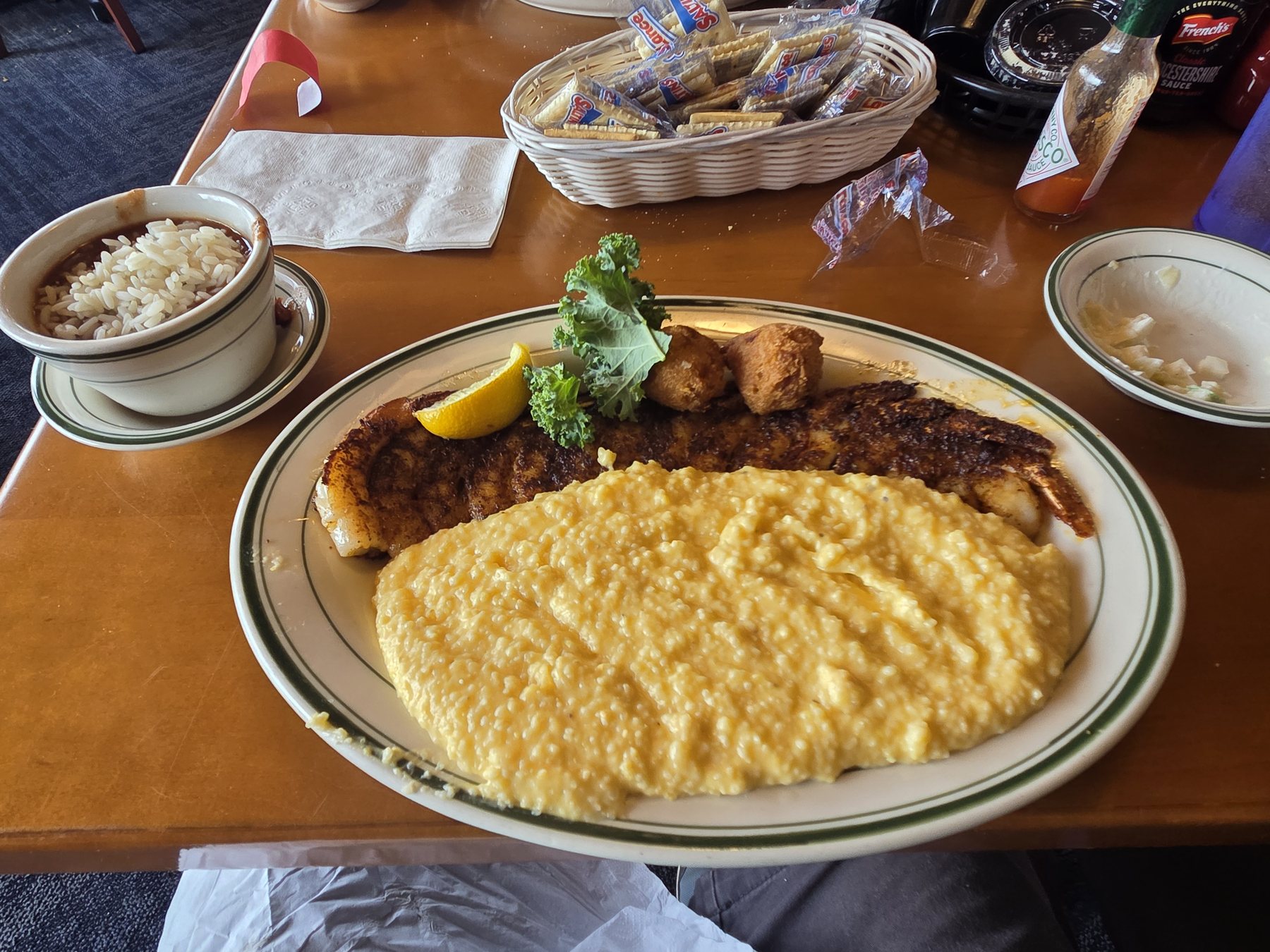
For lunch near Mobile, we followed a recommendation from a customer who had grown up there and went to the Original Oyster House. The seasoning and generous portion were things I wanted to remember when I described the meal later.
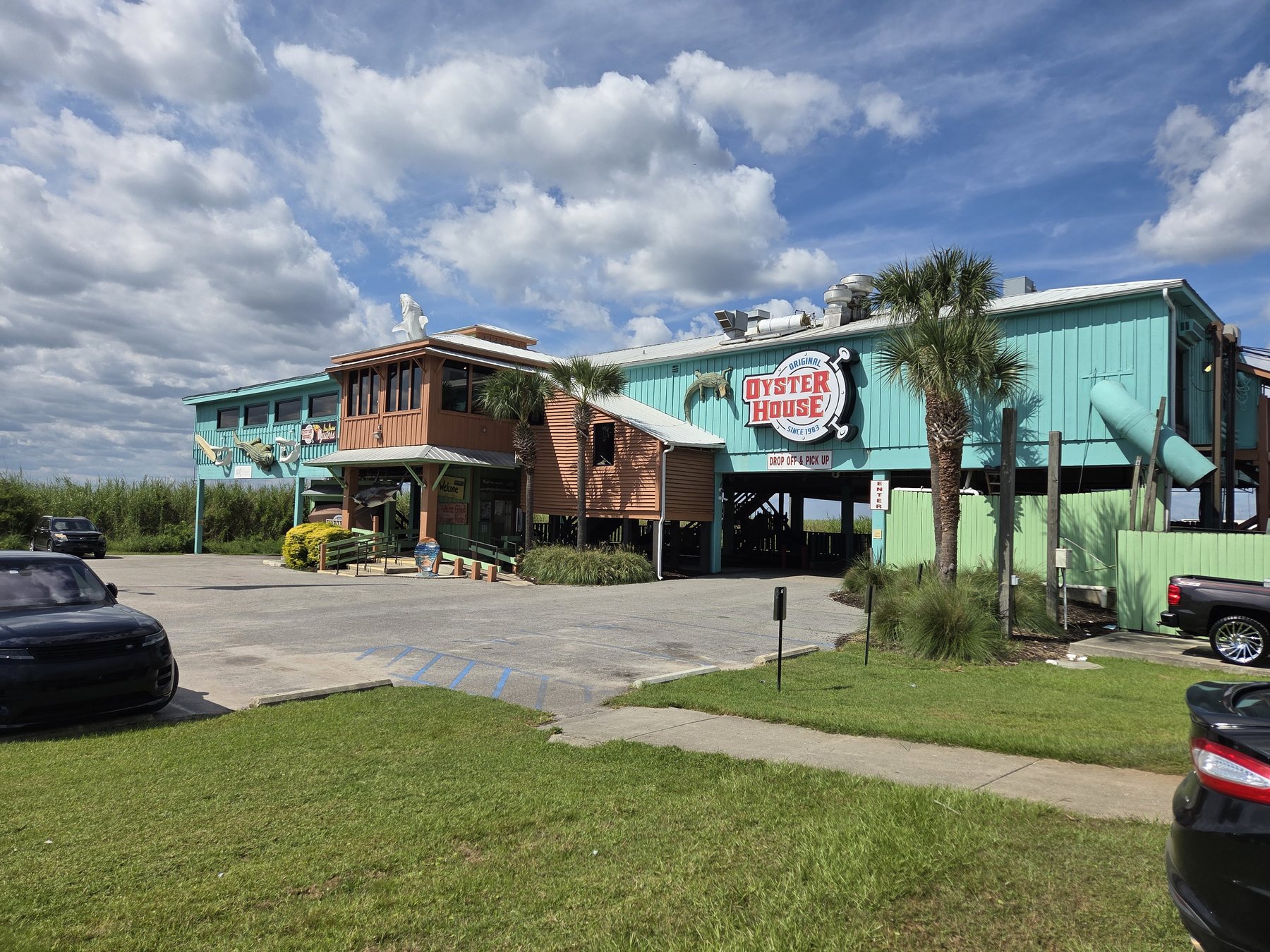
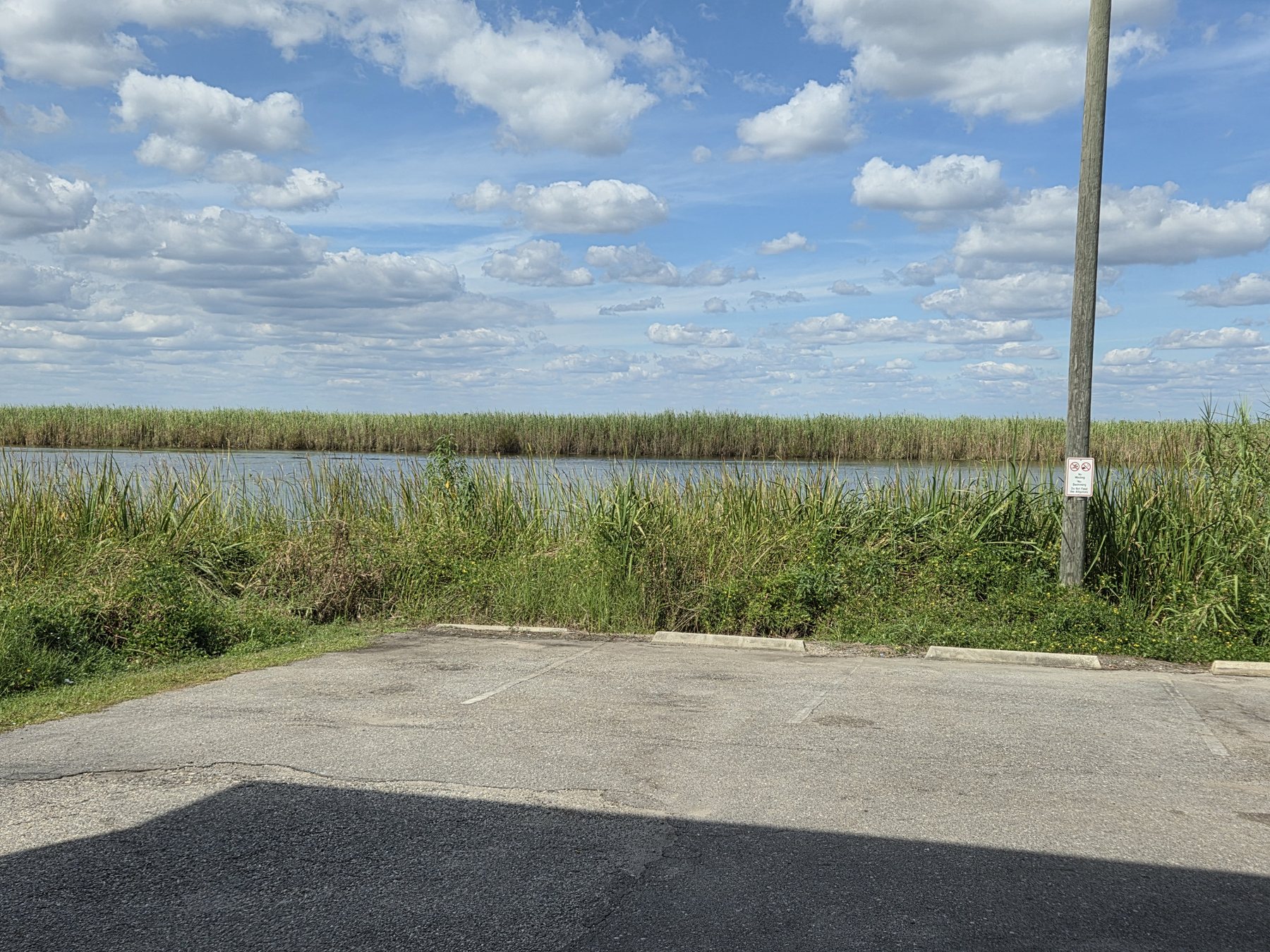
I also took pictures of the marshes around the restaurant.
The USS Alabama grounds
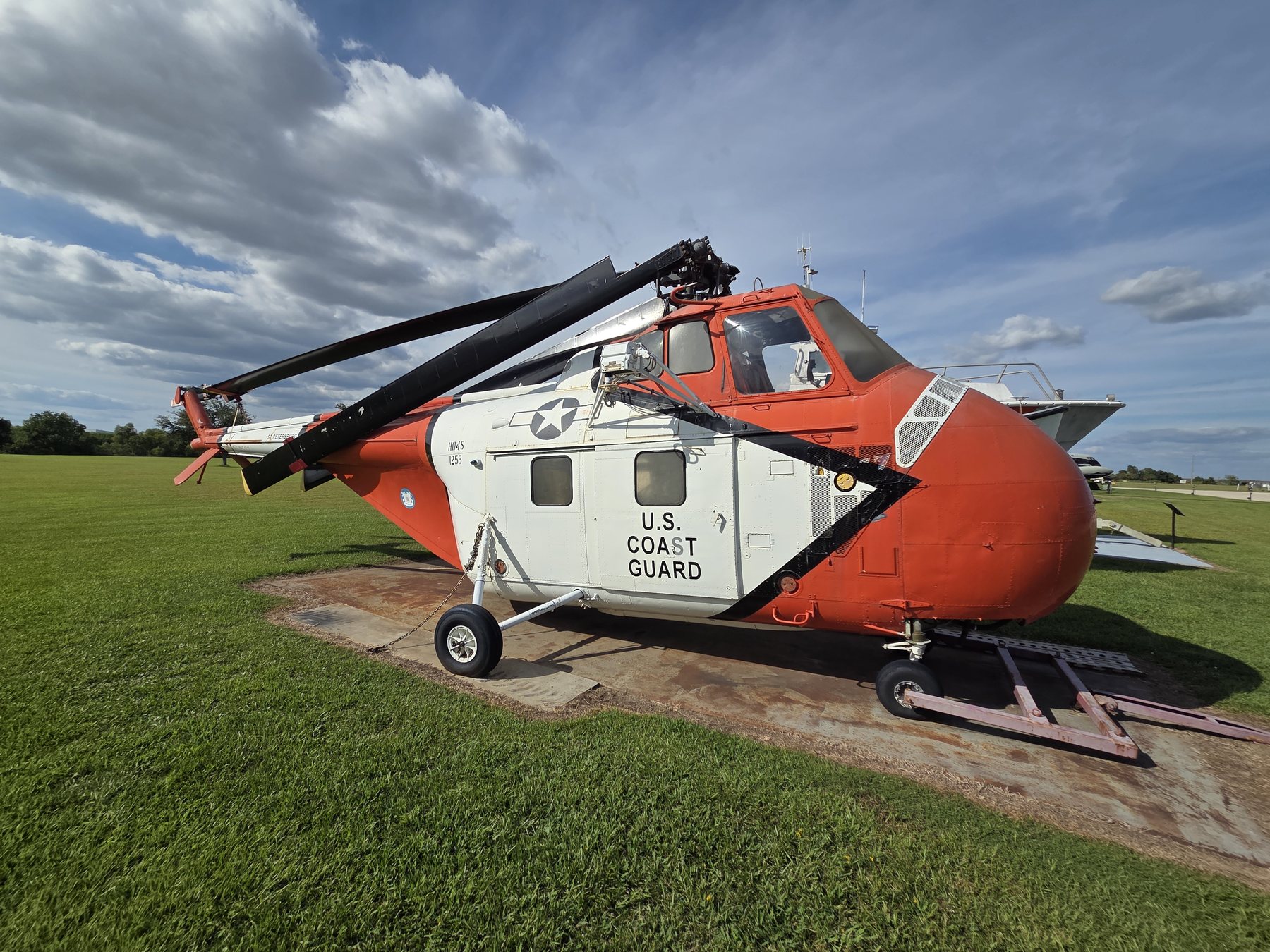
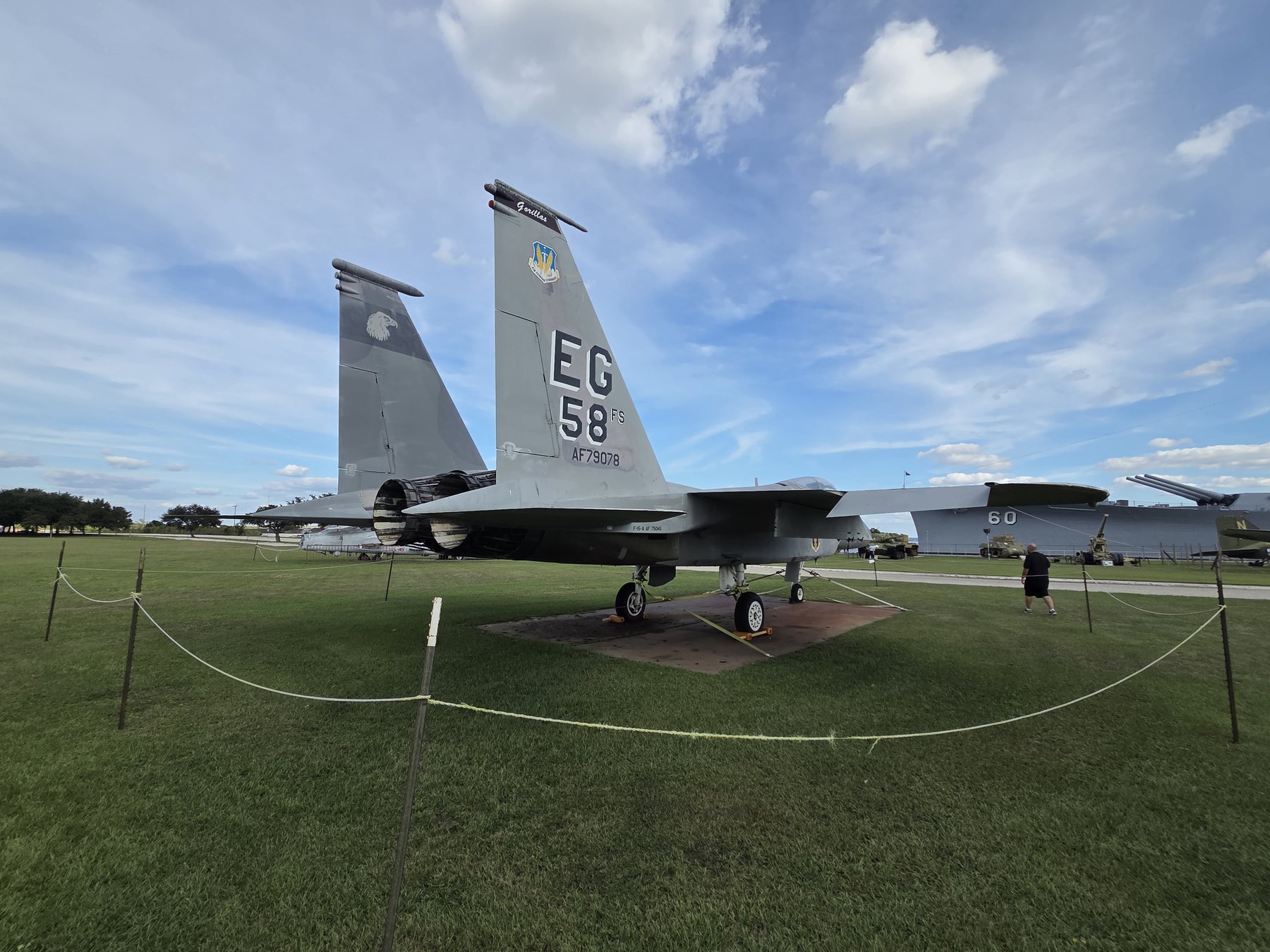
We stopped at the USS Alabama grounds. We decided against paying to go aboard the battleship and spent time looking at the outdoor exhibits instead.
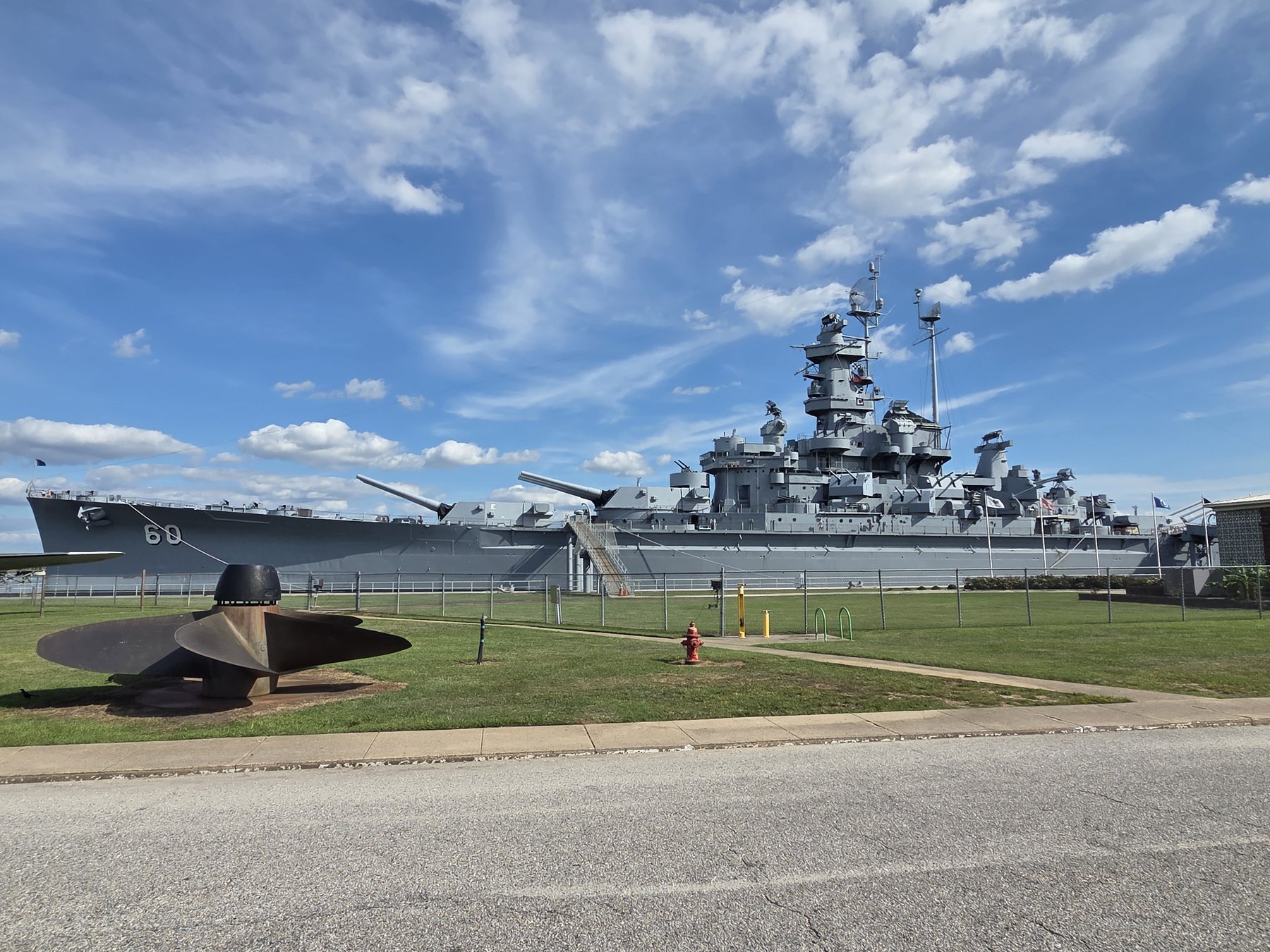
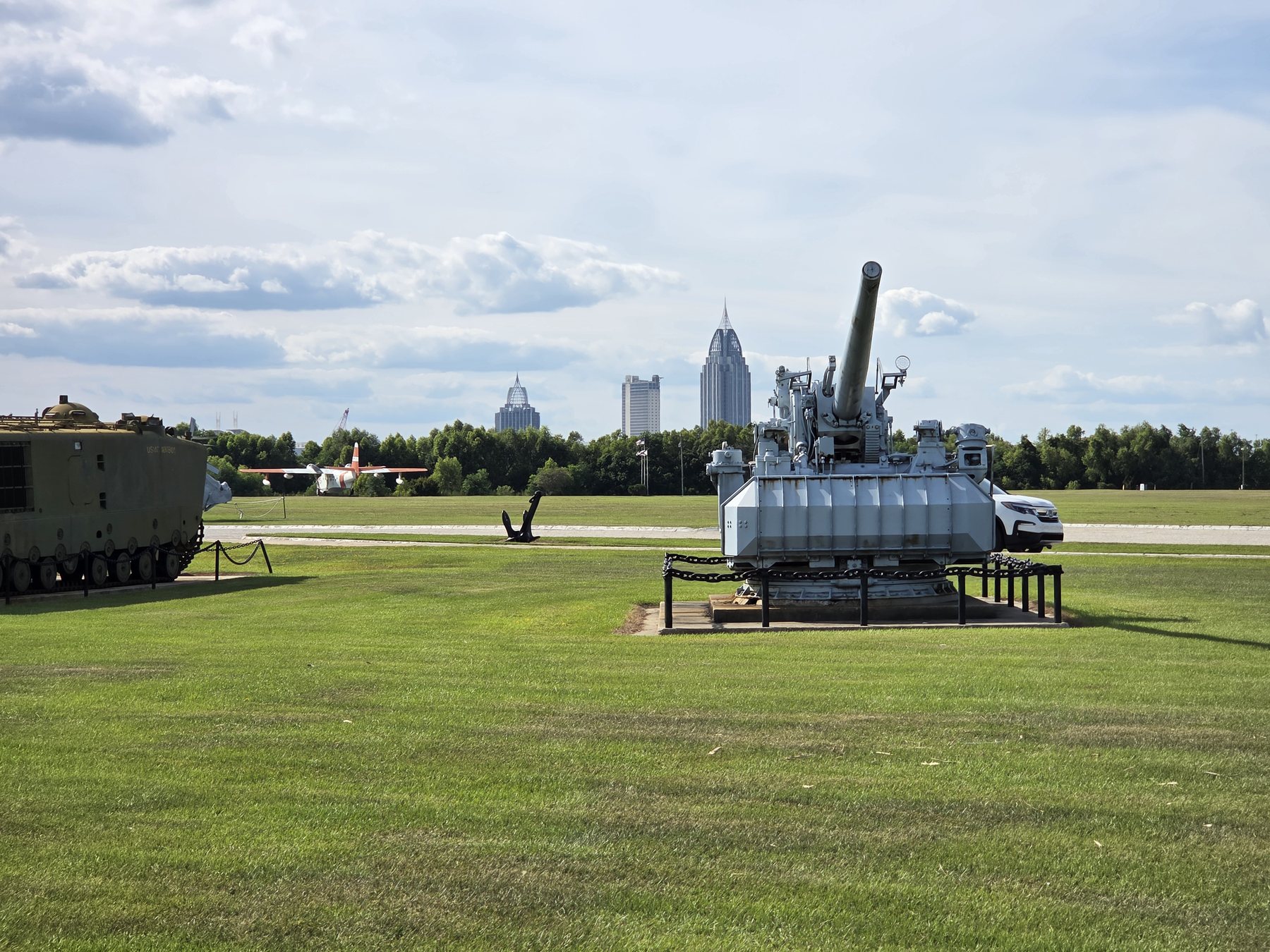
Aircraft, tanks and the ship itself gave us plenty to look at. My interest was in the equipment as much as the view.
The road before the destination
The drive south had its own memories: ribs, a climb up a tower, a conversation in Montgomery, lunch near Mobile, and a stop beside a battleship. We were heading to New Orleans, and there was already a great deal of the trip worth remembering before we arrived.
Four stops, four different reasons to get out
The Alabama part of the journey was not one long pause before New Orleans. Birmingham held dinner and the climb at Vulcan. Montgomery brought buildings, a map and a conversation that connected the place to Brazil. Near Mobile, the restaurant and marshes changed the setting again. The battleship grounds gave us another kind of landscape, full of machinery.
- Birmingham: sharing ribs and fried green tomatoes, then taking the tower stairs when the elevator was closed.
- Montgomery: the capitol area, the First White House of the Confederacy and the host’s conversation with my colleague.
- Near Mobile: lunch at the Original Oyster House and photographs of the surrounding marsh.
- USS Alabama grounds: the ship from outside, aircraft and other outdoor exhibits. We did not go aboard.
Keeping those stops separate makes the trip easier to follow. The food, the history and the equipment are connected by the drive, but each stop has its own setting and story.
The conversation changed the stop
Montgomery stands apart from the other stops because the conversation became part of the visit. My colleague brought a connection to Brazil that I could not supply. The host responded to that connection, and the discussion took a direction beyond looking at a building or reading a display. What remains here is the account of that exchange, rather than a historical conclusion drawn from it.
The relief map offered another kind of connection. We were moving through Alabama by road, and here was an object gathering the state into one view. The tower in Birmingham and the marsh beside lunch near Mobile did something similar at a smaller scale: each stop added a setting to what otherwise might have remained a list of cities along the drive.
Trip photographs
View trip photo collection →
Alabama and New Orleans · 29 photographs