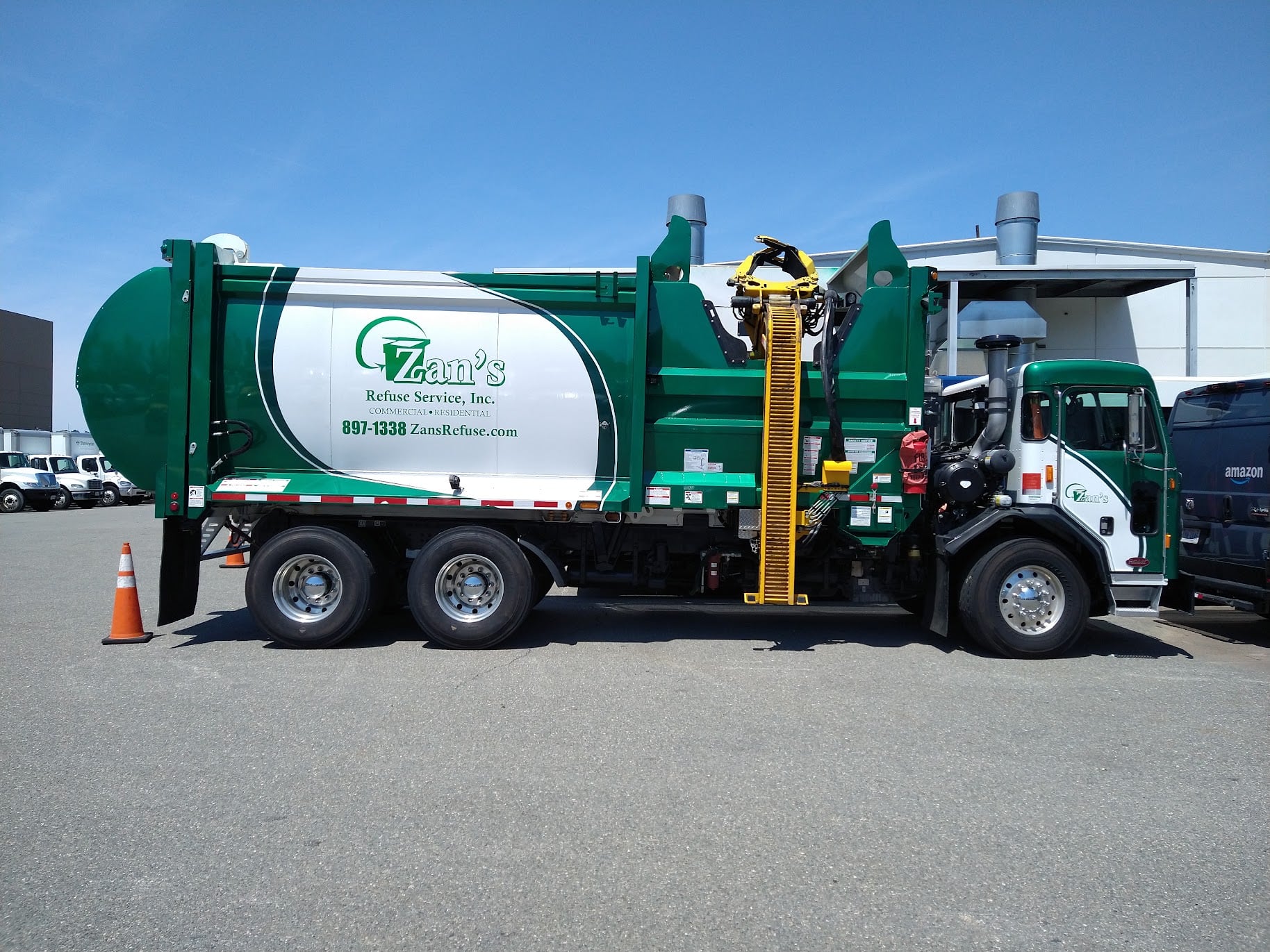
A collection arm beside the body
The Zan’s Refuse side-loader photograph shows the collection arm mounted between the cab and the body. The arm and its hoses are visible in profile, while the body occupies most of the truck’s length. Peterbilt chassis branding and the fleet’s green-and-white colors are part of the archived view.
The refuse equipment and fleet-support chapter follows the customer relationship and subsequent operating work. This photograph gives that chapter a close view of one equipment configuration.
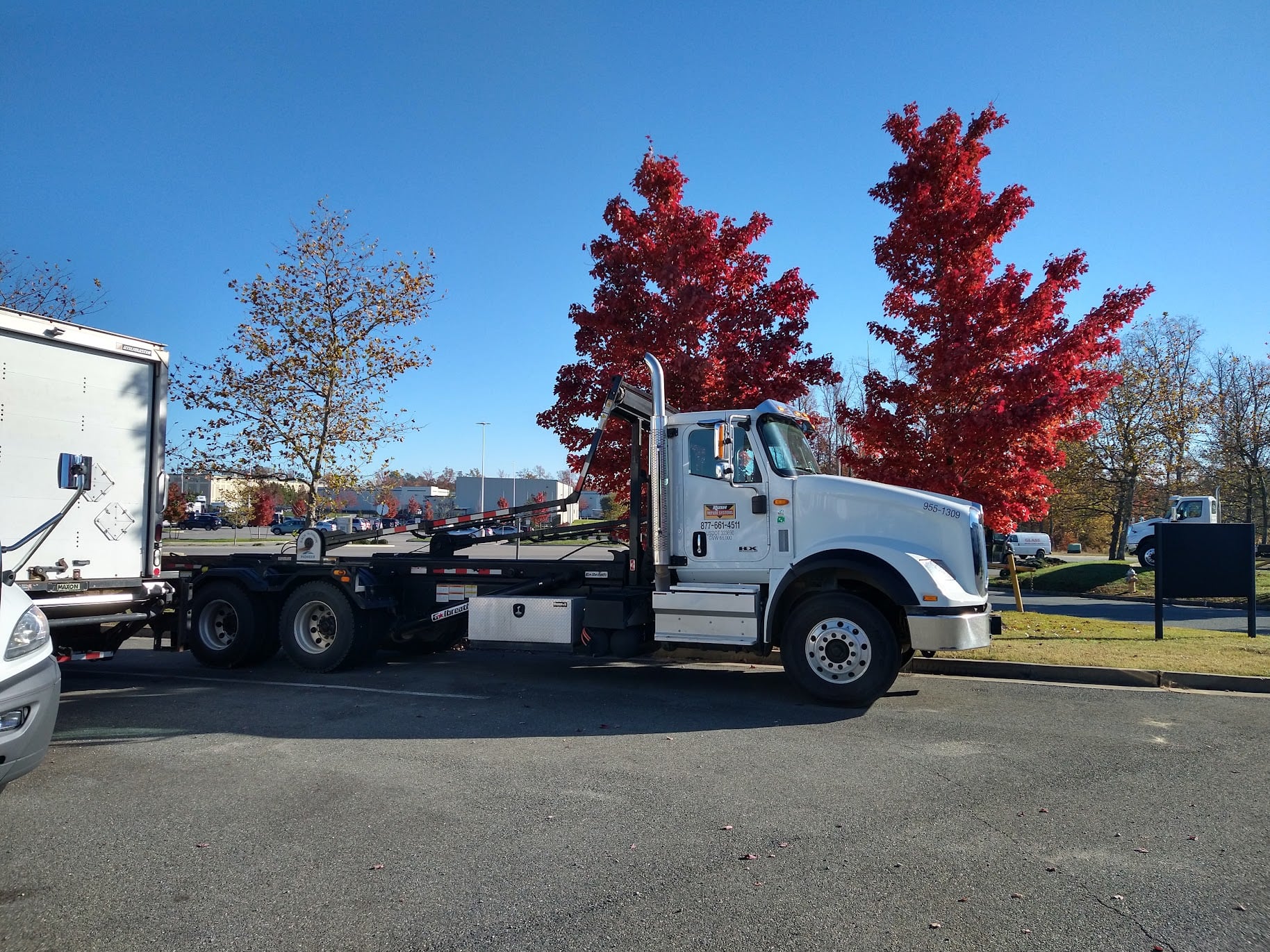
The roll-off hoist exposed
With no container on the truck, the roll-off photograph exposes the hoist and supporting structure behind the cab. The rails, lifting arrangement and space available for the container can be seen in a way they would not be on a fully loaded truck.
The International HX badge is visible, and the empty hoist leaves the truck’s rear structure exposed. This view comes from the refuse-sales section of the presentation archive.
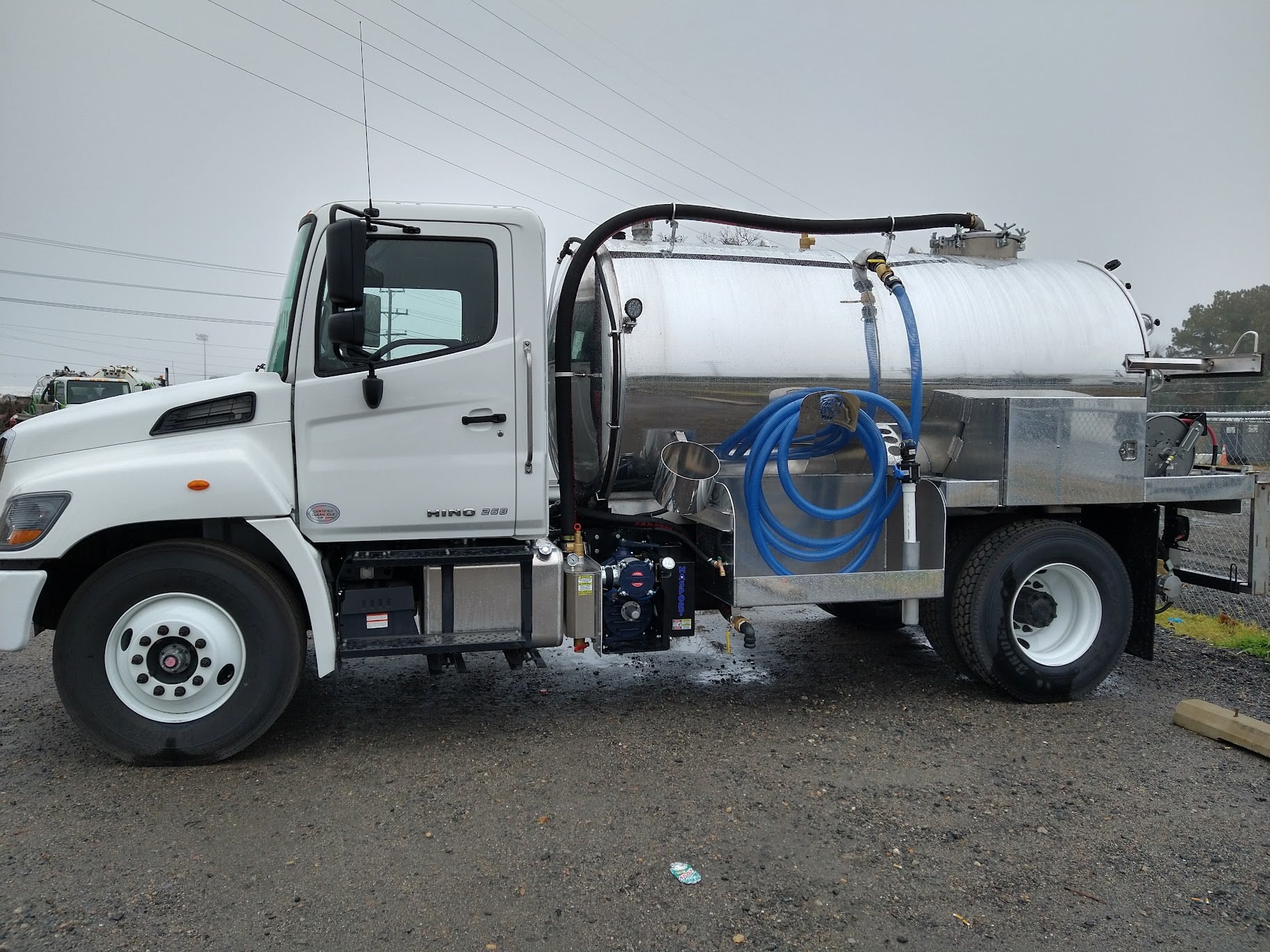
A tank, pump and hose arrangement
On the Hino 268 vacuum truck, the tank is the dominant feature. The side view also records the pump, the blue hoses and the way these elements sit between the cab and rear axle. Hino and Masport branding are visible in the photograph.
The tank, pump and hose route can all be followed within one side view. Together they give more detail to the archive’s general description of a vacuum-tank truck.
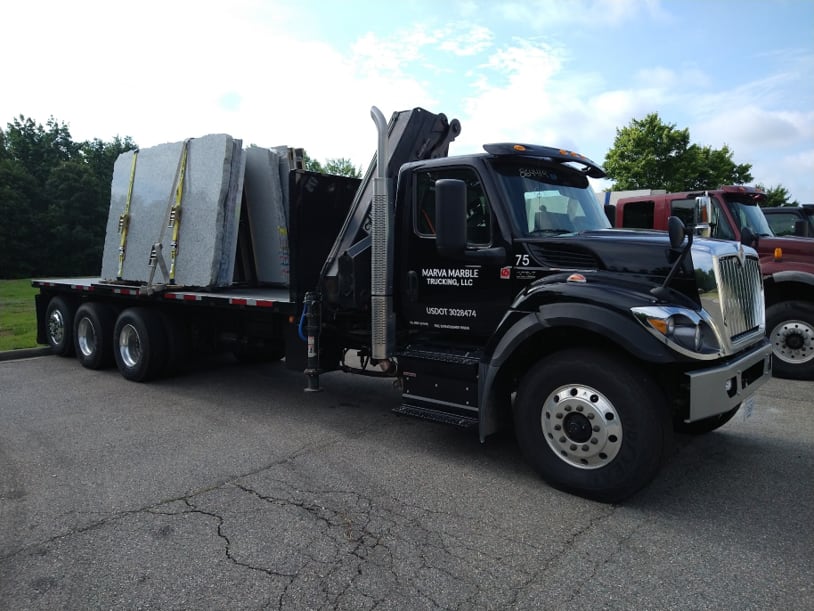
Stone and a folded crane
The stone-delivery truck carries slabs behind the cab, with a folded knuckle-boom crane in the same view. The photograph brings the load and handling equipment together: the slabs, support arrangement, crane and truck body are all visible.
The vocational-truck chapter describes how stone-handling and other specialized applications shaped my customer-discovery work. The photograph preserves the load and the handling equipment together in one configuration.
Source: photographs retained in my equipment presentation archive, Muncie Support_1.pptx. These views show the equipment and settings recorded in the photographs; the associated career pages provide the account of my work.
Keep exploring
The body changes the question behind the truck
The four configurations show why “a truck” is only the beginning of an application discussion. The collection arm, exposed roll-off hoist, tank-and-hose arrangement and folded crane each direct attention to a different piece of work. Looking behind the cab makes the purpose of the equipment easier to discuss.
The useful next questions would follow what has to move and how the operator interacts with it: a container, a removable body, material handled through hoses or stone carried with its lifting equipment. The photographs help frame those questions, but cannot establish payload, lifting capacity or the correct chassis-and-body match. Those require an identified specification. This is also a historical equipment archive, rather than a statement that the pictured vehicles are available for sale or that every illustrated application remains an active offering.