The food connection is one particular harvest
My own garden, through dated observations. The food story here begins with spinach used in an April 28 smoothie. That preparation has its own garden-to-blender account, including the ingredients and my recorded reaction.
The later garden photographs document other observations across the season. They do not establish that each plant became a meal or that the pictured vines produced the spinach.
One of the clearest results from the garden happened in the kitchen. On April 28, I put spinach I had grown into a smoothie for the first time. I photographed the ingredients, tried the drink and recorded that I was pleased with it.
The rest of the season is less neatly contained. There are leaves to look at, fruit still on a plant and questions about what will grow well. The photographs and notes preserve those visits as separate moments.
April: a first taste from the garden
The spinach gave me a direct connection between growing something and using it. It was one ingredient in one drink, and it had come from the garden.
That moment has its own short account, From the garden to the blender. It is a definite result to keep alongside the less settled observations later in the season.
June: looking closely beside the fence
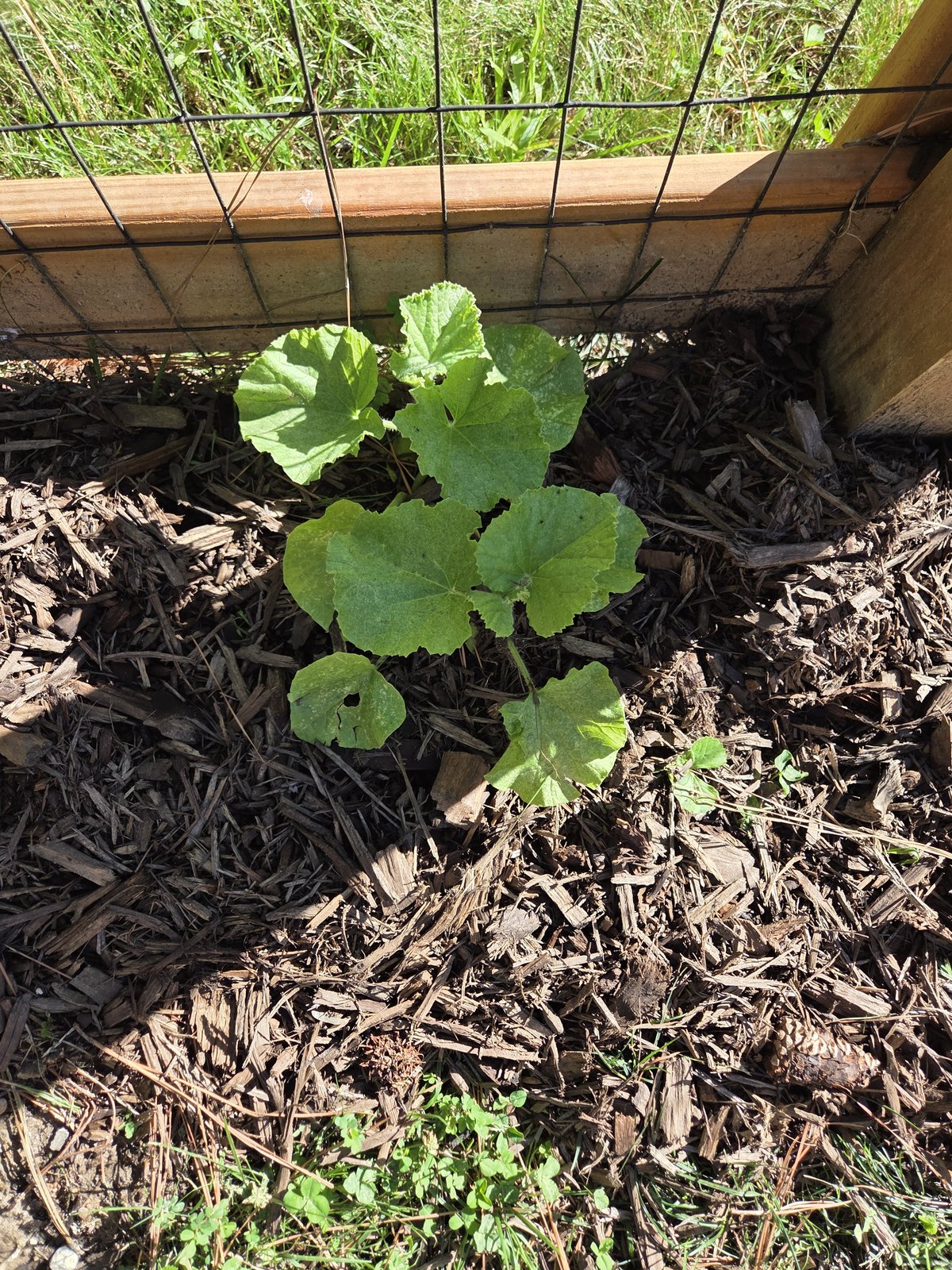
The June photograph stays close to the ground. The leaves sit within a bed of wood chips, next to the wire and timber of the fence. Sunlight makes the leaf surfaces easy to see, including the small holes.
It is a useful record of what was there on that visit. It does not yet tell a complete story about the plant’s growth or its eventual crop. Those would take a confirmed identification and later observations of the same plant.
August: a pepper still on the plant
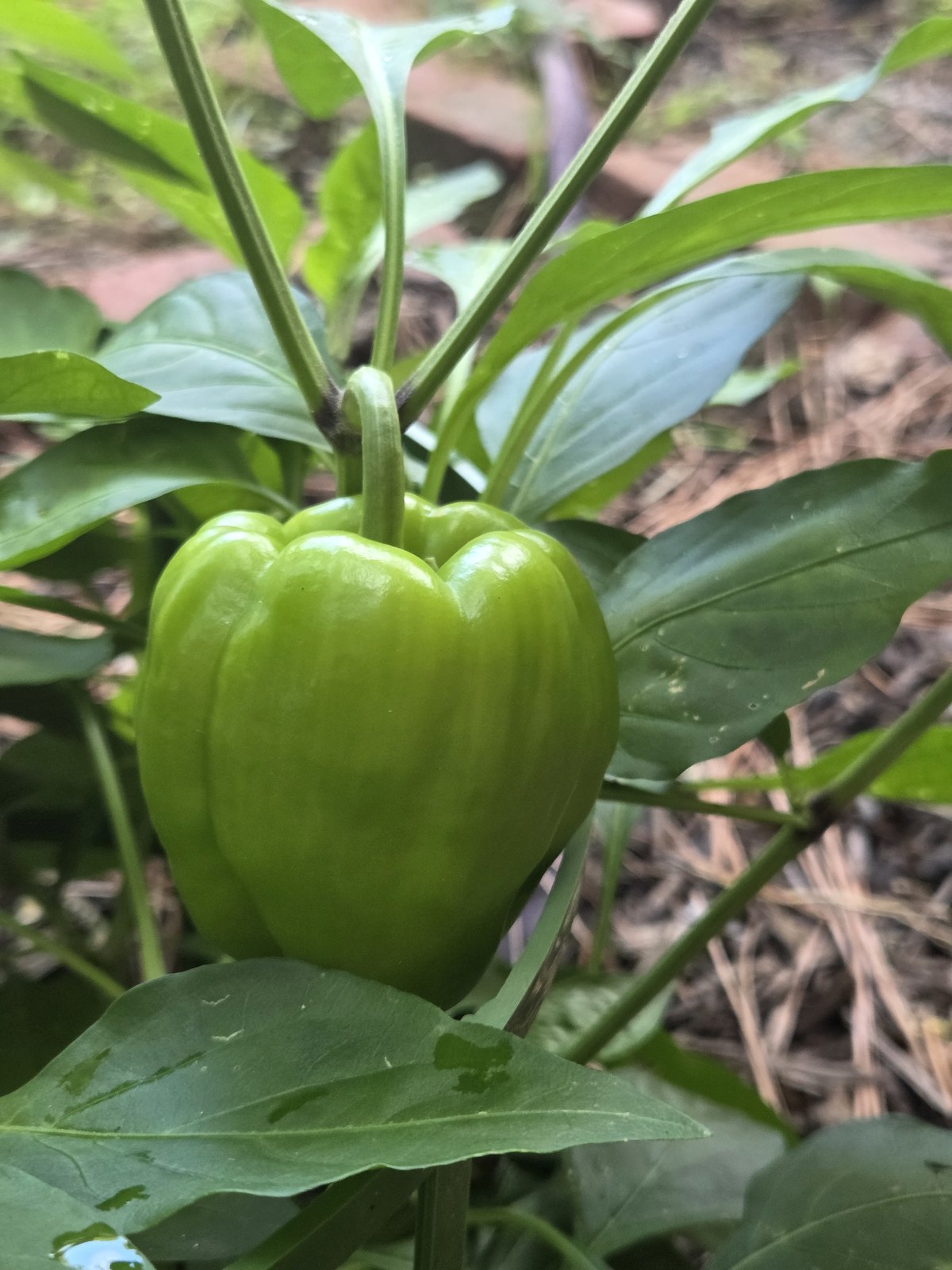
By August, a different close view centers on the pepper itself. It is still attached to the plant, framed by leaves and stems. The image keeps that moment before any decision about picking or cooking it.
A photograph of fruit on a plant is satisfying in its own right. What happened after this frame—whether this particular pepper was picked, what it was used in and how it tasted—is another part of the account.
September: questions still open
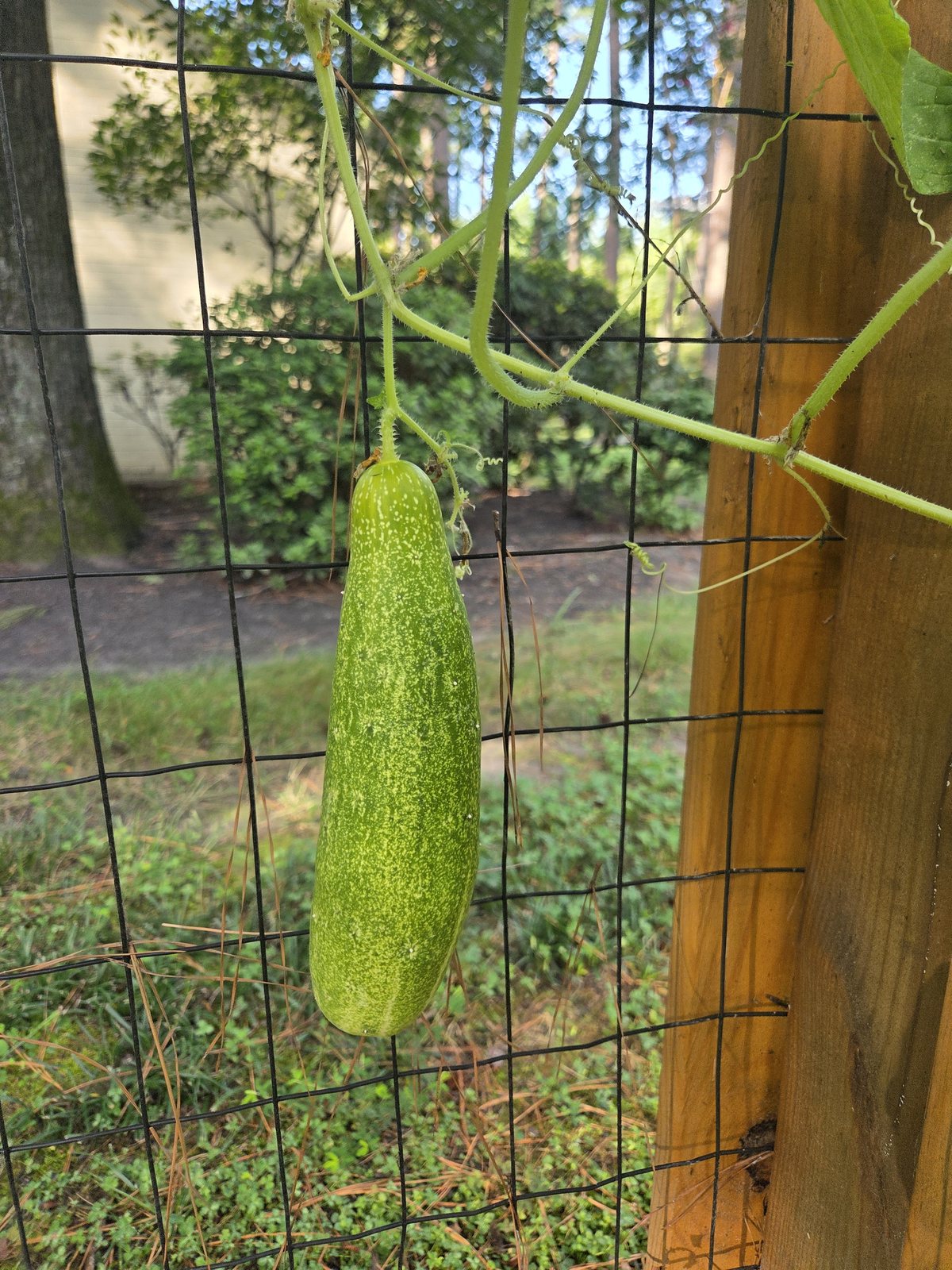
My later garden notes return to the vines, the cantaloupe and the condition of the blackberries. I was still looking and wondering. Around the compost pile, mushrooms after rain had become another recurring subject for photographs.
These visits sit beside the spinach smoothie without all having to become the same kind of success. Some end with something I ate. Others preserve a plant’s appearance or a question I was still working through.
That is the season I can follow here: a first taste in April, a closer look in June, a pepper in August and more questions in September.
The photographs show separate plants and visits. They are not a before-and-after sequence of one crop. The April and September passages draw on the existing garden accounts; no total harvest, savings or treatment result is claimed.
The garden reaches the kitchen in small ways
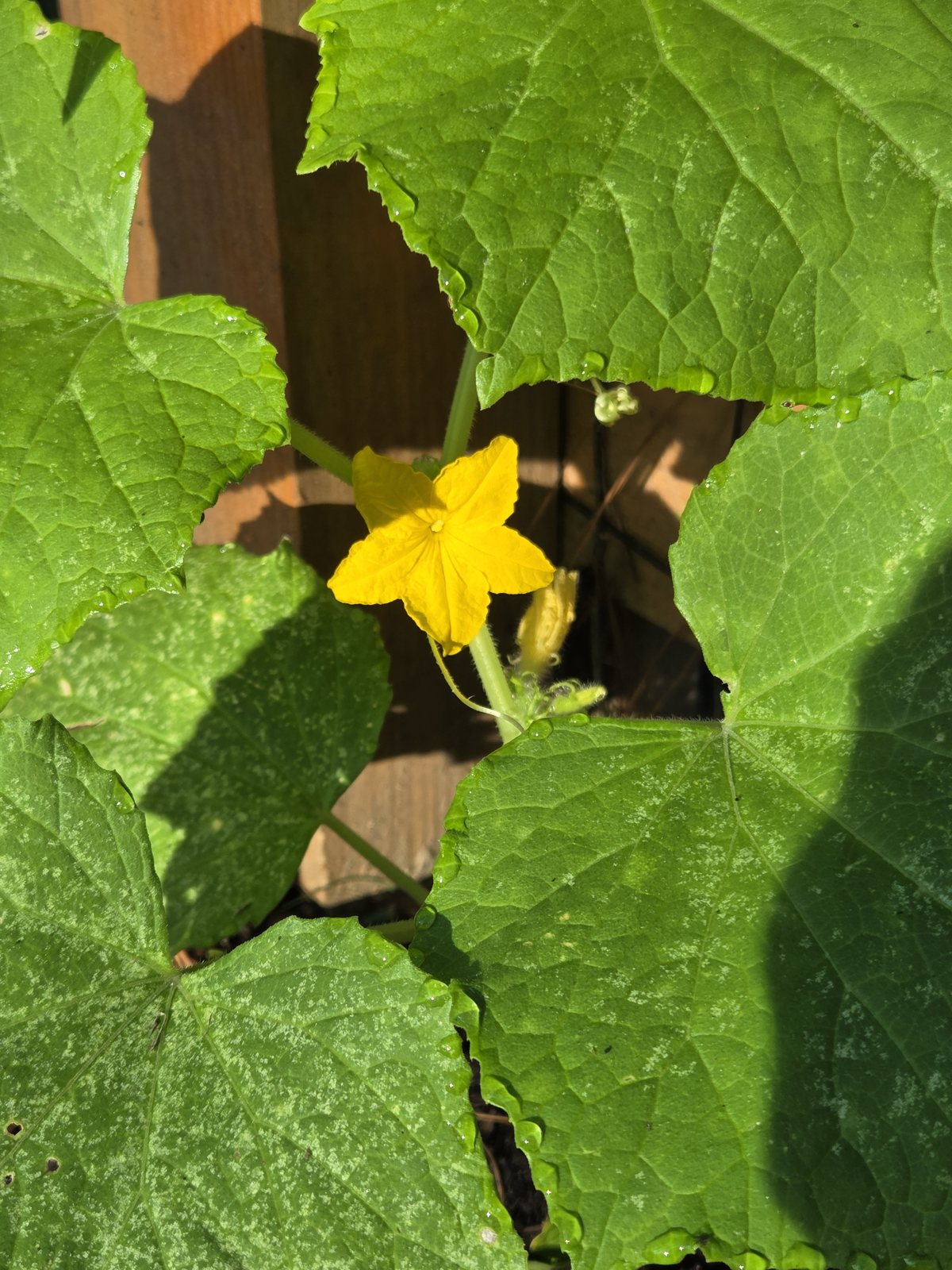
The spinach lunch is a useful anchor because it closes a small loop: something grown at home became part of a drink. The later photographs preserve earlier points in other plants’ stories, when a flower, leaf or hanging pepper was still the immediate subject.
That gives the garden journal more than one pace. Some entries can follow a crop all the way into a meal; others can stay with a question from one visit. The next useful link for the pictured pepper would be its own harvest or cooking account. It would add a real connection between the garden and the kitchen without turning separate plants into one tidy season-long sequence.