The household container purchases
Ownership origin. EasyLunchboxes divided containers, a PackIt lunch box and Bumkins reusable bags appear in the household purchase history. They establish the products behind this entry.
The storage-cupboard photograph adds a kitchen scene, without identifying those exact items. A particular packed lunch or current routine has not yet been connected to the purchases.
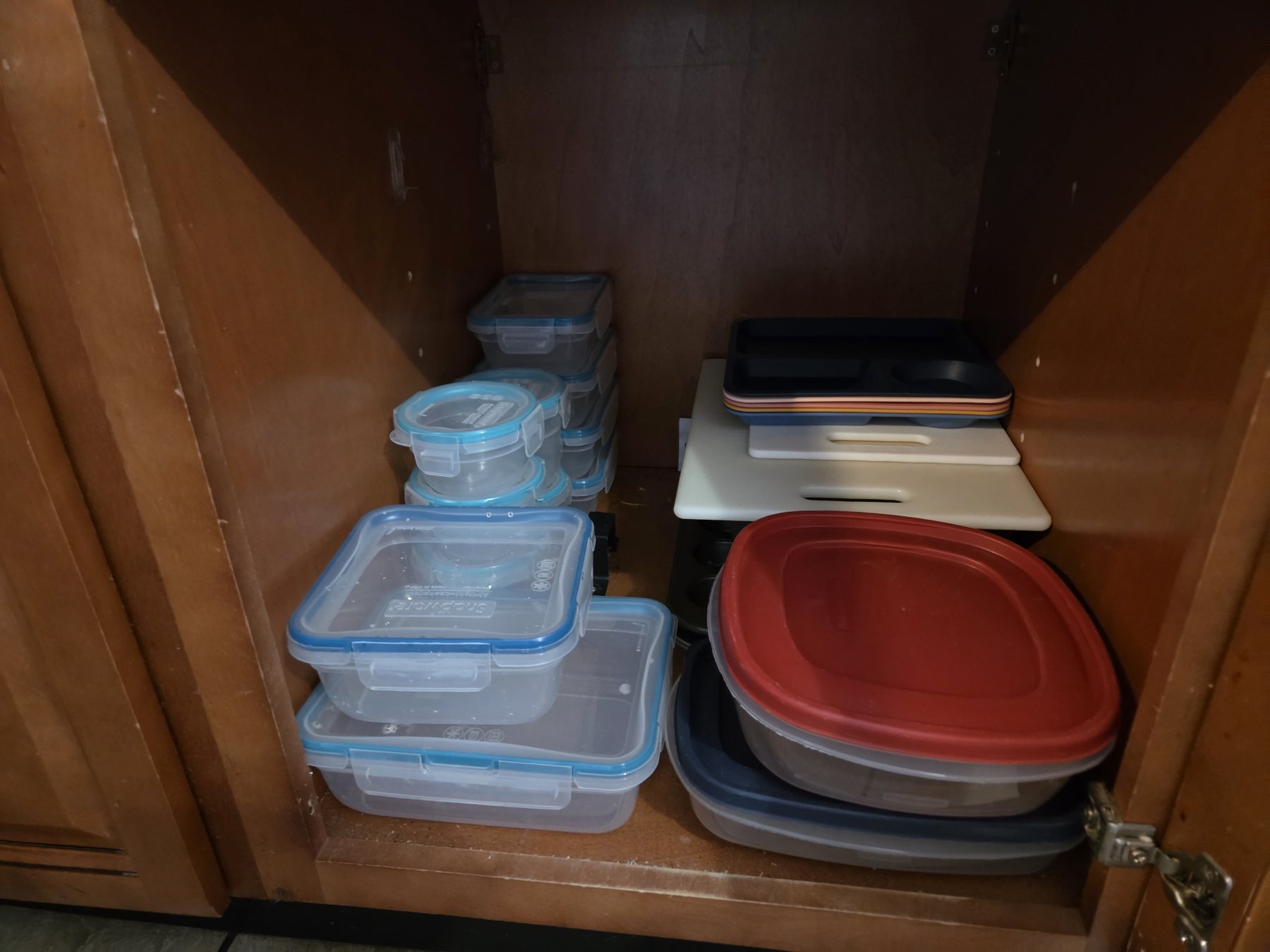
Our household purchases include EasyLunchboxes divided containers, a PackIt lunch box and Bumkins reusable bags. Lunch has its own equipment, even when the food is already in the kitchen.
The food and what carries it
A packed meal asks a different question from dinner at the table: how will the portions and separate components travel? The box or bag matters through the food it holds and the cleaning it needs afterward.
The order history spans several years, but repeated purchases do not explain themselves. An item may wear out, another size may be useful, or a household may need more containers. These records do not establish which explanation applied.
I have not yet connected the recorded containers to a current lunch routine. Claims about regular leftovers, money saved or waste avoided would go beyond what the purchase history shows.
The container is part of the meal
The divided boxes, lunch box and reusable bags suggest different ways of carrying food. Their useful comparison would begin with an actual packed lunch: which items needed separation, what fitted together and what came home to wash. The purchase names alone cannot show how that combination worked.
A current lunch account could keep the food and the carrying equipment in the same frame, then follow the containers through unpacking. That would make capacity, access and cleaning easier to discuss without assigning a reason to every repeat purchase. It would also keep a real account of leftovers separate from the broader assumption that owning lunch containers means a particular meal-planning routine was followed.