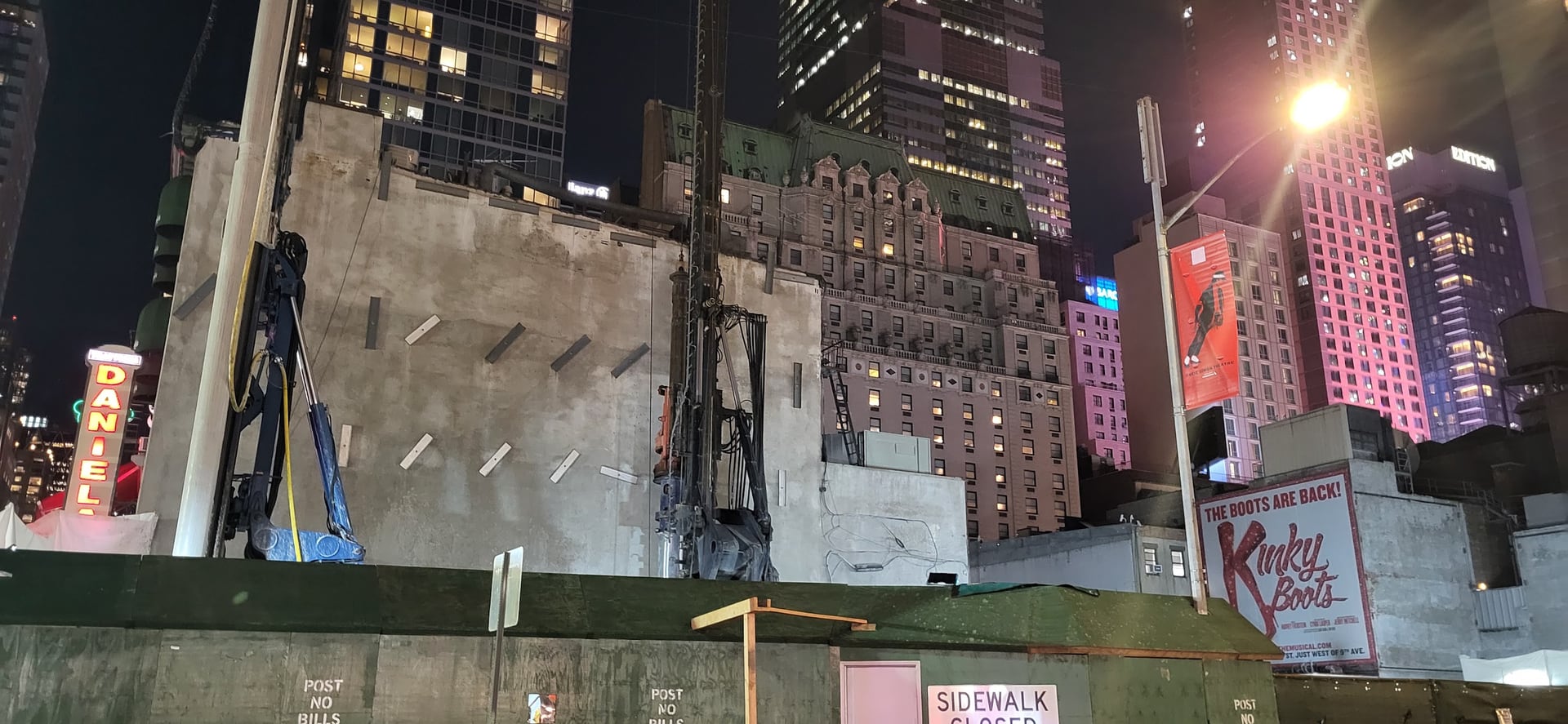
Equipment within the site
The drilling photographs in my archive range from whole machines to individual connections. This city scene shows tall foundation equipment behind a construction fence, with illuminated buildings close around it. The masts and the surrounding buildings share the frame.
Windows, illuminated signs and work lights surround the equipment. The construction fence cuts across the lower part of the view, while the masts rise above it into the city scene.
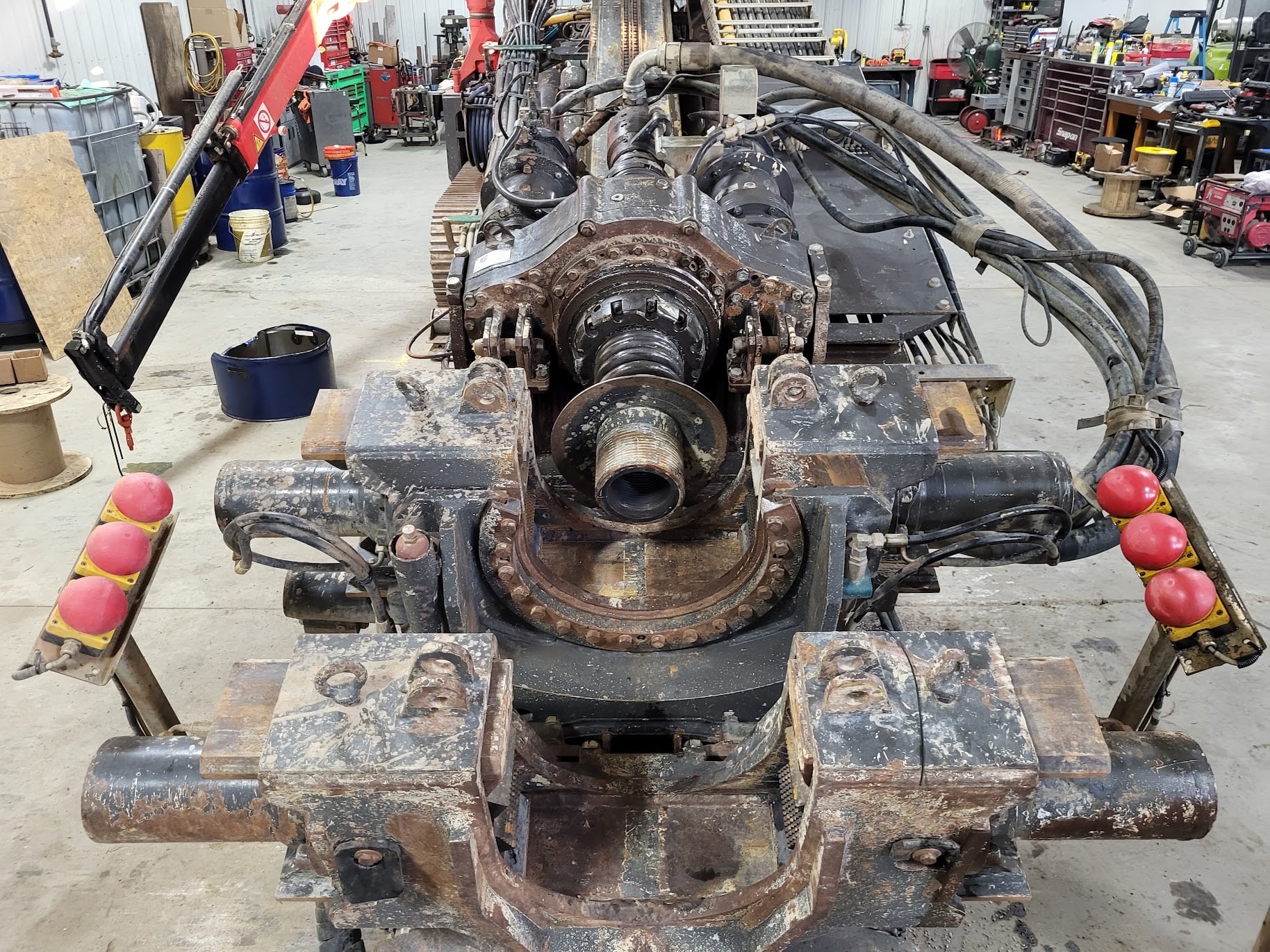
A closer view in the workshop
The workshop view brings the drilling head, clamps, hoses and controls into the foreground. At this distance, the machine becomes a collection of connected parts: the central opening, surrounding clamping hardware, hydraulic lines and control handles can be seen together.
The image also retains the workshop around the assembly: tool storage, containers, a lifting arm and the space on either side. The machine and its working surroundings can be read together.
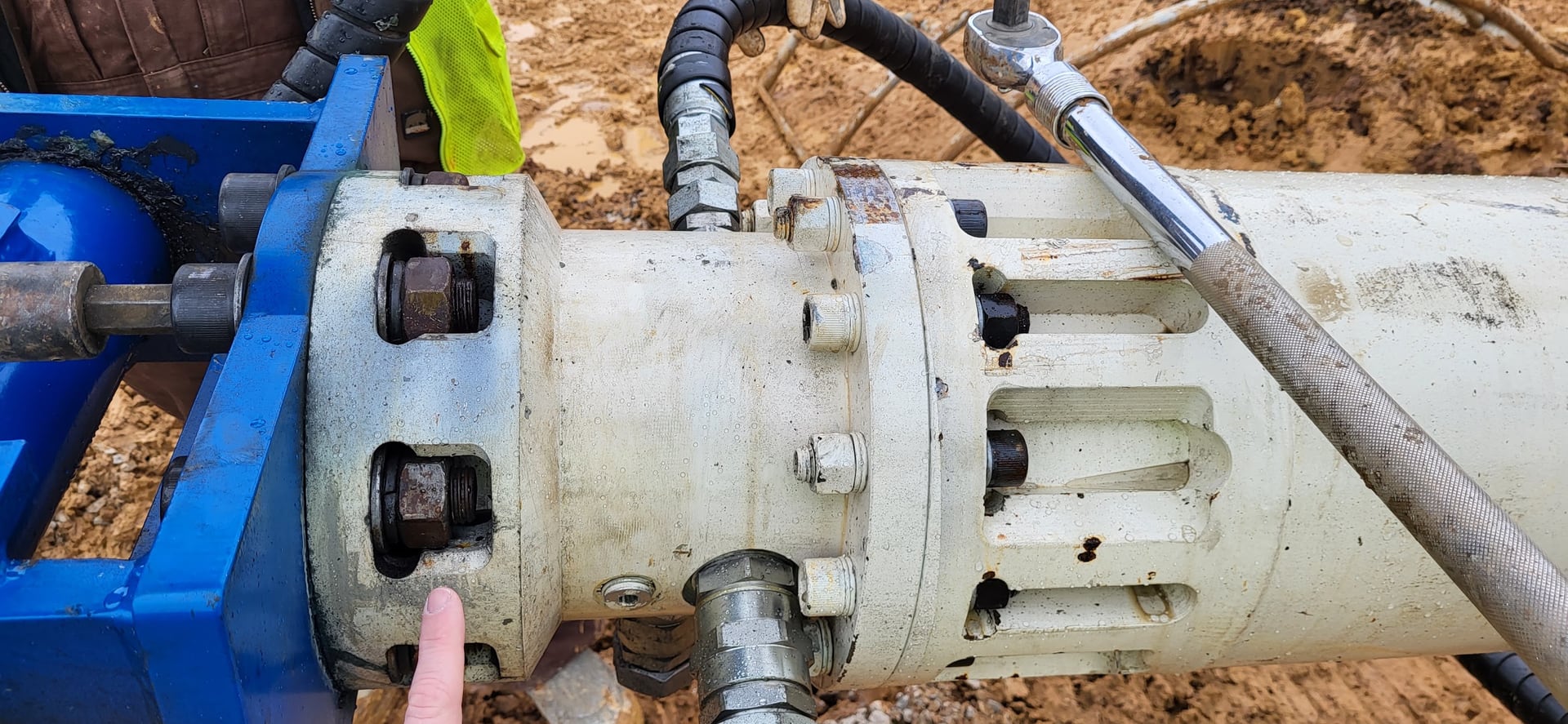
Connections at the drilling drive
The next image moves closer again. Bolted housings, hose connections and the blue mounting structure fill the frame. A hand points to one of the fasteners, giving a sense of scale.
The connections and fasteners give this photograph its detail. Alongside the wider workshop and site views, it preserves a closer look at the hardware within the equipment.
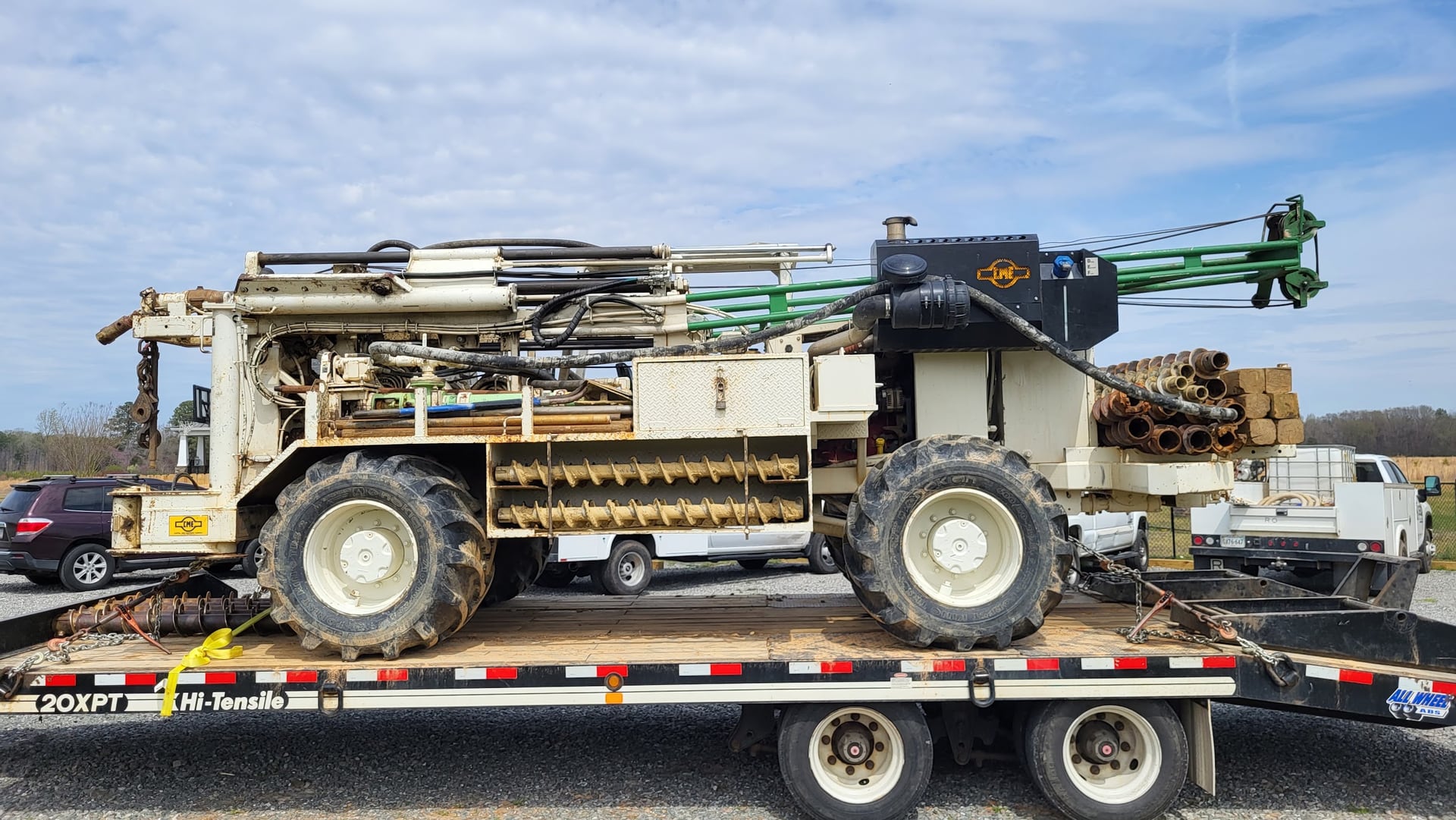
The machine on a trailer
The transport photograph shows a wheeled CME drilling machine on a low-bed trailer. The mast is horizontal, and drilling tools are carried alongside the machine. The presentation places this photograph in its “Measurement While Drilling” section.
This view adds the machine’s transport configuration to the archive. The separate drilling equipment case describes the application-discovery and sales work; these photographs preserve the settings and machine details around that experience.
Source: photographs retained in my equipment presentation archive, Muncie Support_1.pptx. These views show the equipment and settings recorded in the photographs; the associated career pages provide the account of my work.
Keep exploring
From component to machine →Four views, four kinds of questions
Read together, the photographs move through the questions that make an equipment application concrete. The city view asks where the machine must work. The workshop view asks how an assembly is arranged and reached. The close hardware view directs attention to the interfaces between parts. The trailer view brings movement between locations into the account.
Those are useful ways to look at the archive, rather than specifications derived from the images. A visible hose does not establish a circuit’s pressure or flow, and a machine on a trailer does not establish transport weight or a permitted route. The photographs provide settings and details that can guide a conversation. Drawings, machine identification and the operating requirements would be needed to turn that conversation into a technical proposal. The linked career account supplies the separate history of my work.