A brand name is easy to recognize from across a machine. The smaller origin statement requires a closer look. These photographs bring the two into the same frame: the Danfoss name alongside a statement about where a particular product was made or assembled.
“Made In India”
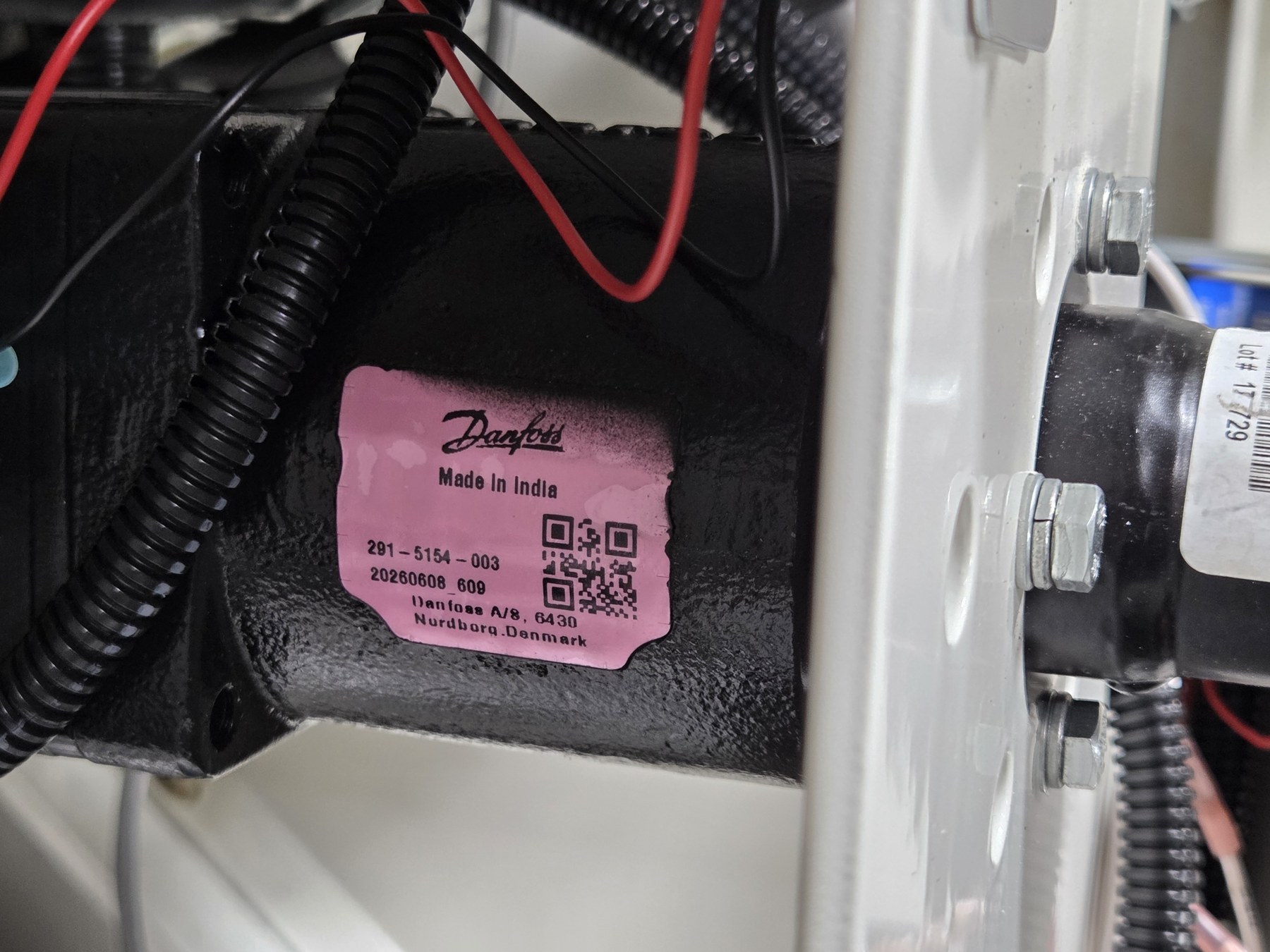
The pink label carries the Danfoss name, the words “Made In India,” and a Danfoss A/S address in Nordborg, Denmark. The product marking reads 291–5154–003. The photograph is from the August 27, 2026 batch; it is a separate occasion from the March CONEXPO pictures.
The address and origin wording answer different questions. A company address printed in Denmark does not override the product’s stated manufacture in India. For this photographed unit, the label is direct evidence of the origin statement the manufacturer placed on it.
“MADE IN CHINA”
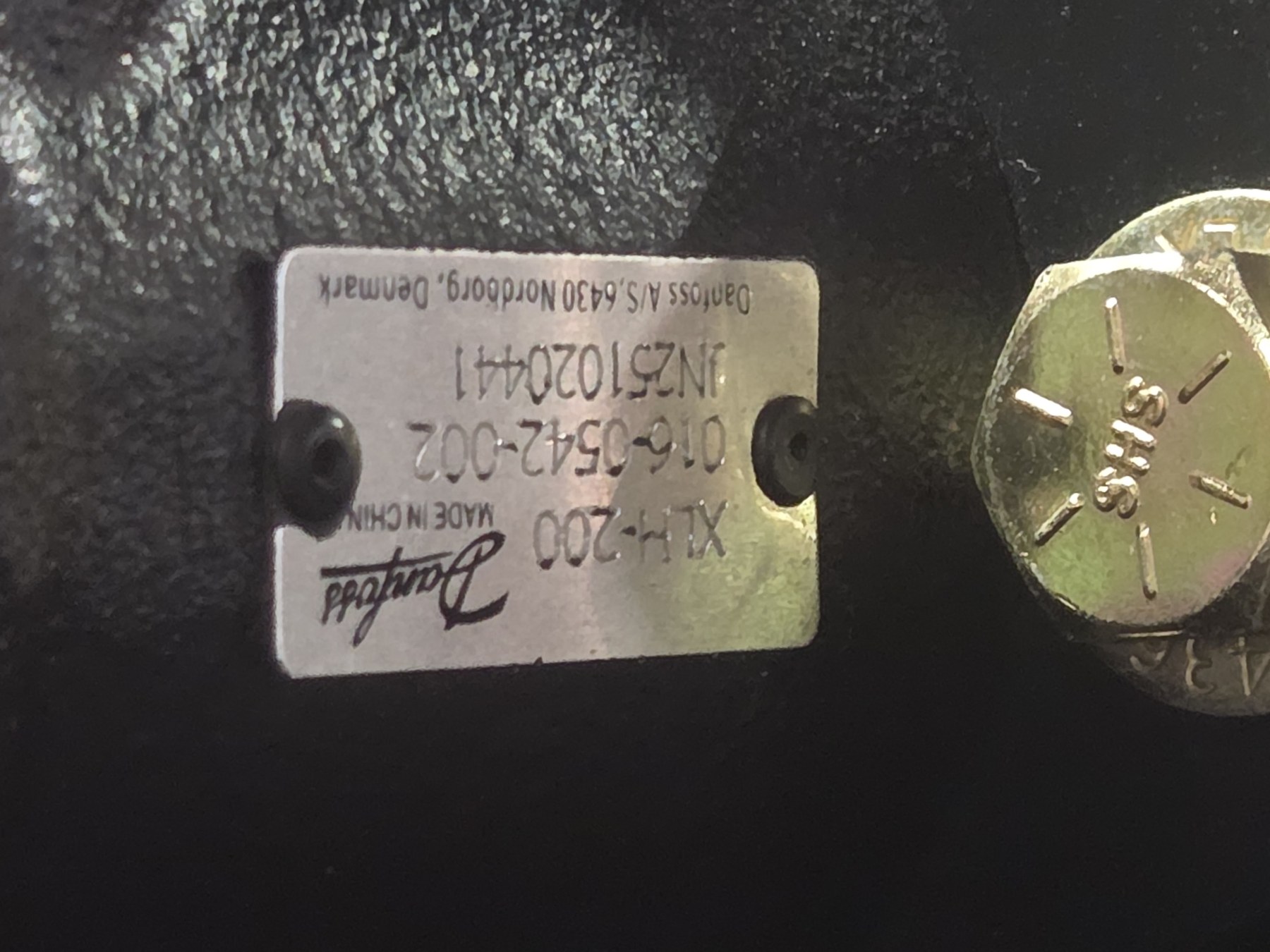
The metal plate on the second photographed motor carries the Danfoss name, the marking XLH-200, and “MADE IN CHINA.” A Danfoss A/S address in Nordborg appears on the same plate. The image belongs to the March 7, 2026 photo sequence.
Read at this scale, the distinction is difficult to miss: the brand, its printed address and the stated place of manufacture are separate pieces of information. They should stay separate when the product becomes part of a larger machine or a claim about domestic industrial capability.
“ASSEMBLED IN CHINA” is another statement
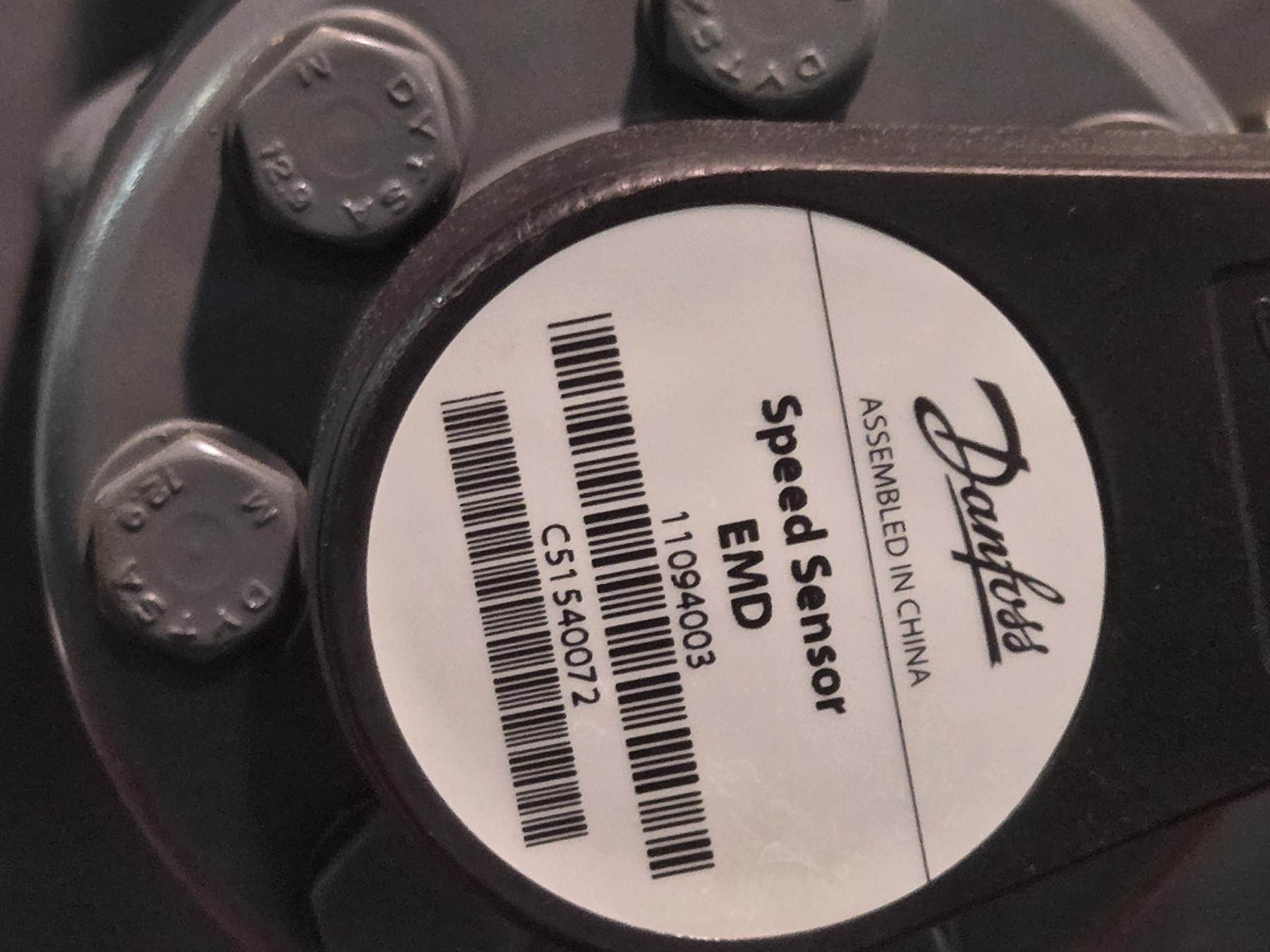
The round Danfoss label in the third photograph reads “ASSEMBLED IN CHINA” and identifies a Speed Sensor EMD. That is an assembly statement on a sensor, not the same wording as “MADE IN CHINA” on the motor plate. Preserving the exact words makes the comparison stronger.
What the labels bring to the argument
These are individual photographed products. The labels do not establish the origin of every part inside them, the share of Danfoss production in any country, or the origin of the entire machine around a component. They also do not establish that a particular factory or job moved from the United States. Those claims would require their own records.
What they do establish is enough to ask a serious industrial question. When an American equipment business buys a globally branded component, what manufacturing, engineering and service capability is it obtaining here, and what remains dependent on production elsewhere? Answering that accurately is part of the leadership standard this series argues for.