Select a photograph to enlarge it.
On Sunday, July 19, I visited the towing museum in Chattanooga. In the note I recorded after leaving, I kept returning to how much I had enjoyed it. The history of towing had become something I could walk around and look into.
The photographs move from whole vehicles to the machinery fitted behind their cabs: booms, cable drums, pulleys, housings and hooks. Those details make the visit worth a closer look.
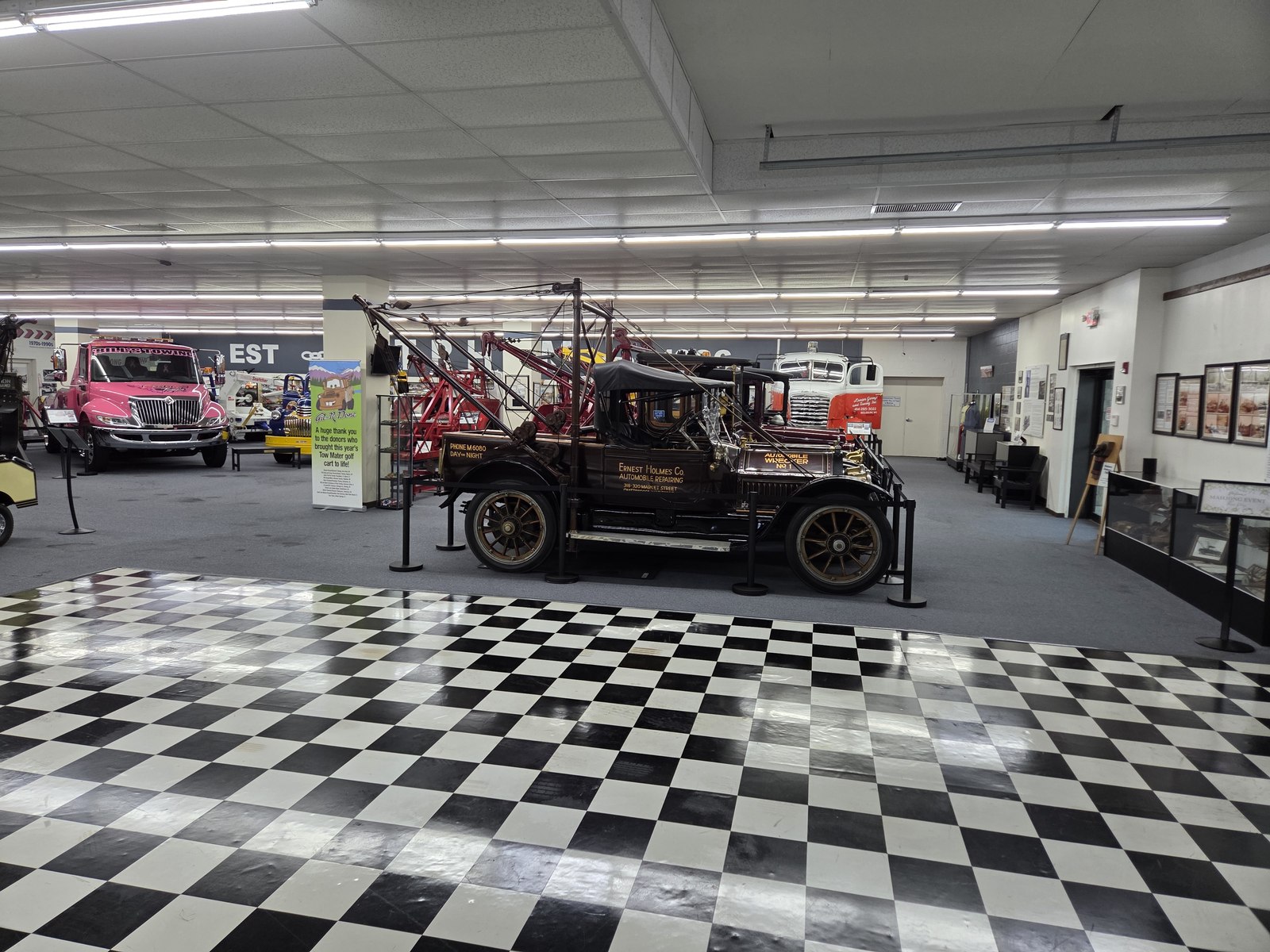
The older vehicles
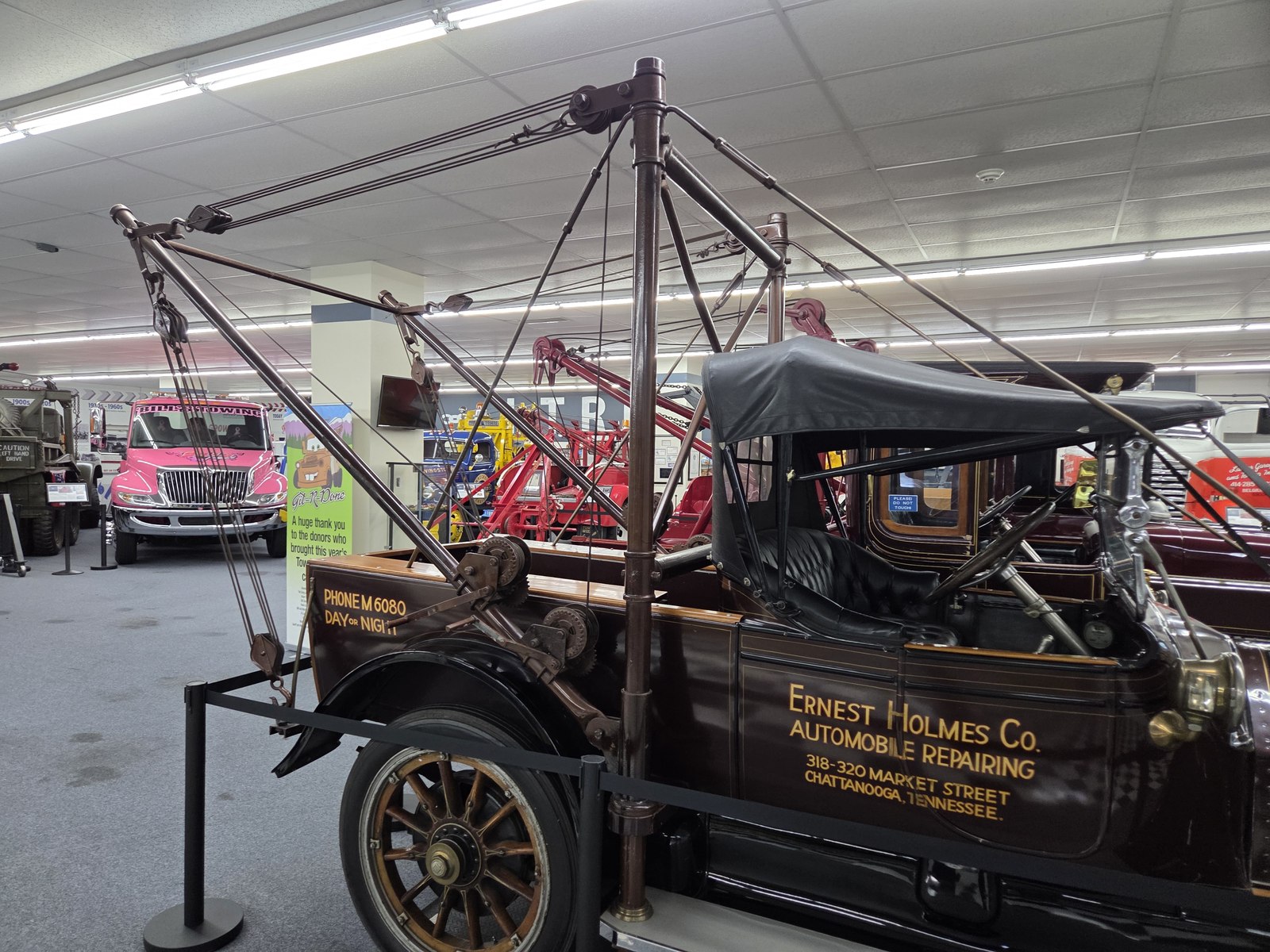
The open cab and wood-spoke wheels give this display vehicle a very different outline from the large trucks behind it. Above the body, cables run through pulleys between tall uprights and angled booms. The lifting arrangement is exposed to view.
Ernest Holmes lettering appears on the side. The cable paths, drum positions and tall support structure give plenty to look at around it. The equipment can be followed from its mounting points on the vehicle to the pulleys overhead.
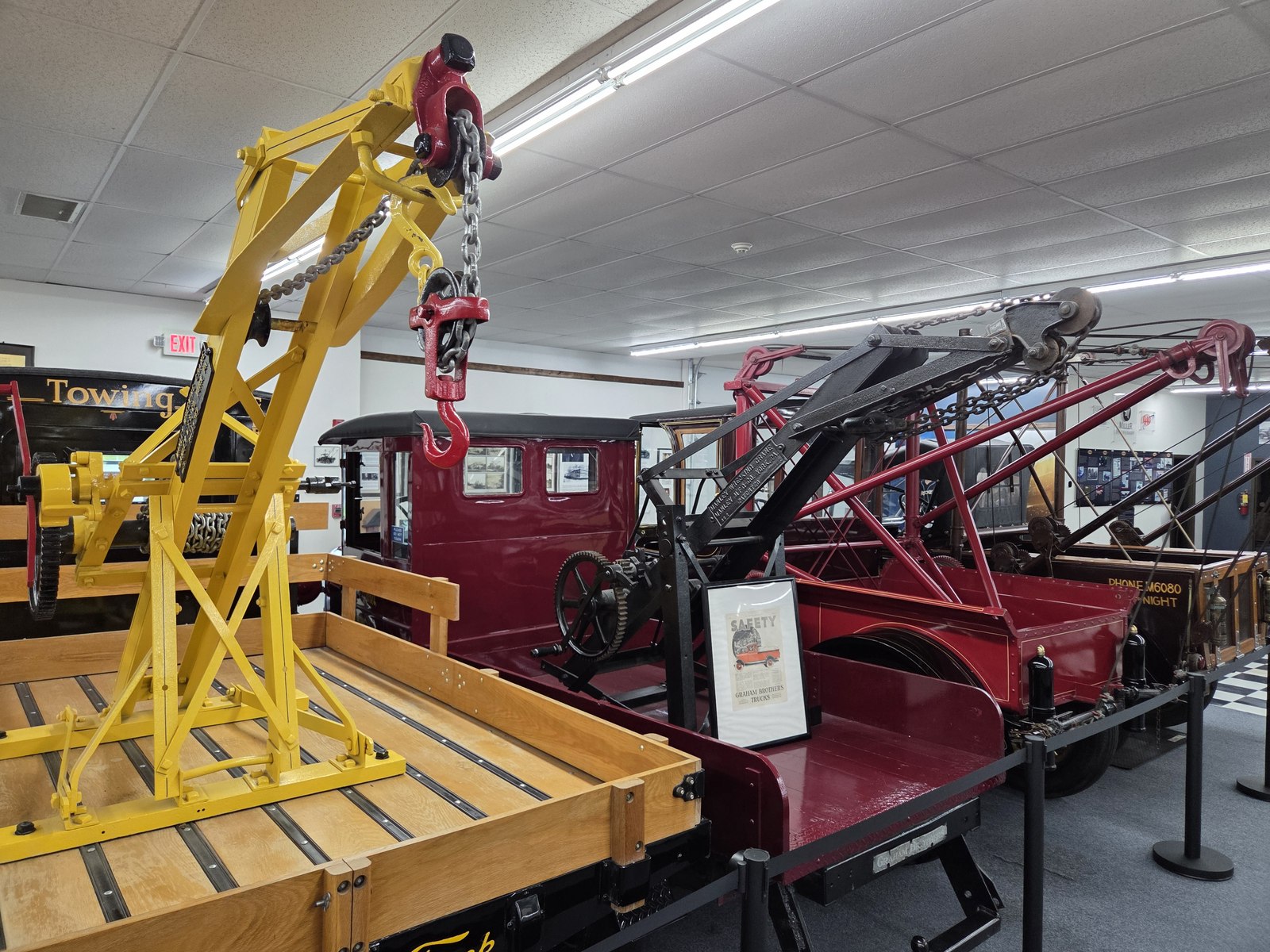
A nearby yellow hoist makes another clear shape against the museum ceiling. Red hooks hang above a wooden bed, with other towing vehicles crowded into the background. Different construction, colors and proportions keep the room from becoming a line of similar truck fronts.
The truck and the machinery
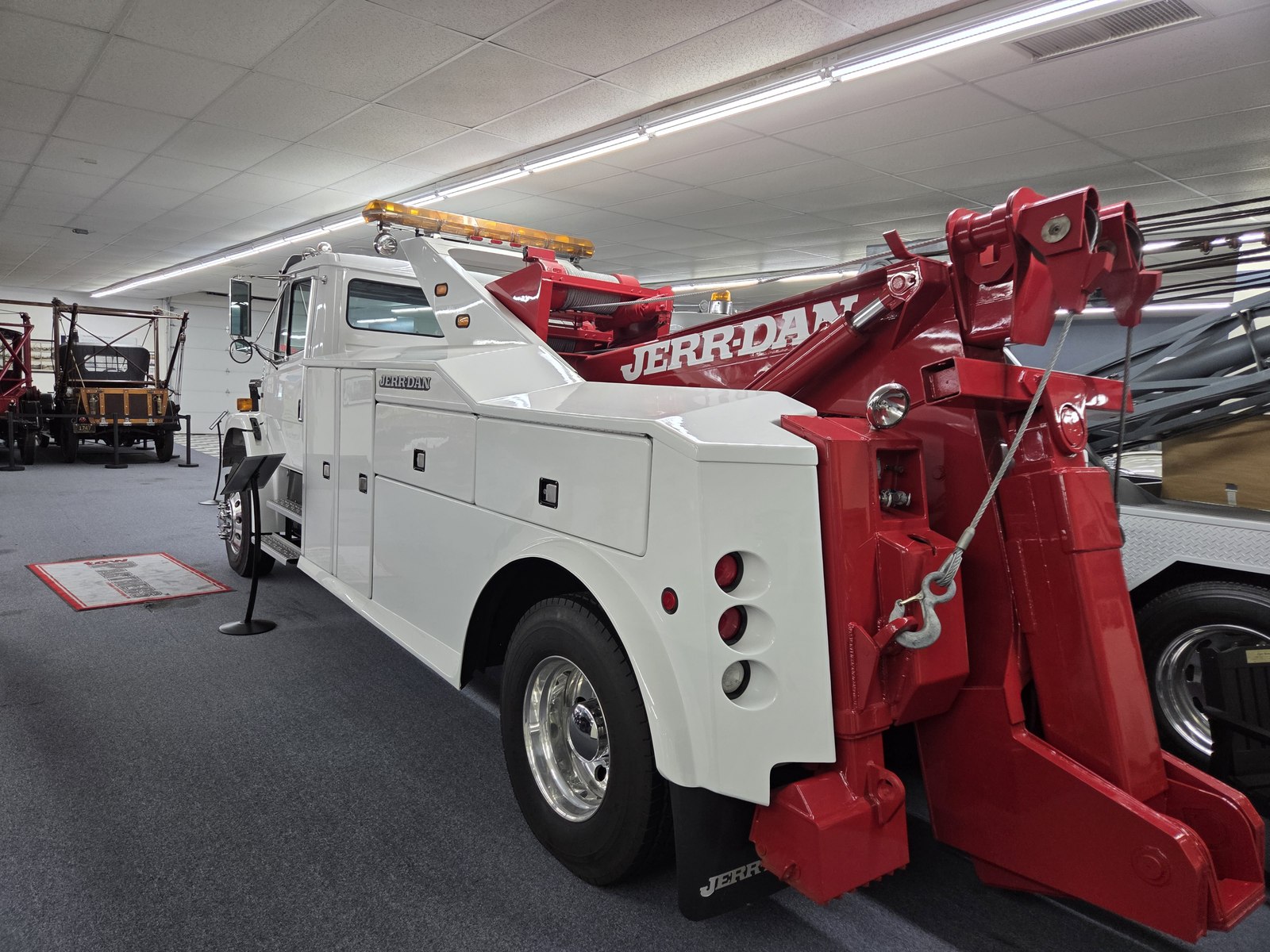
The white truck with red Jerr-Dan equipment brings the body and lifting arrangement together in one view. Storage compartments, rear bodywork, lights and working hardware share a relatively compact space behind the cab.
From this angle, the equipment is part of the truck's overall layout. Moving closer reveals another view entirely.
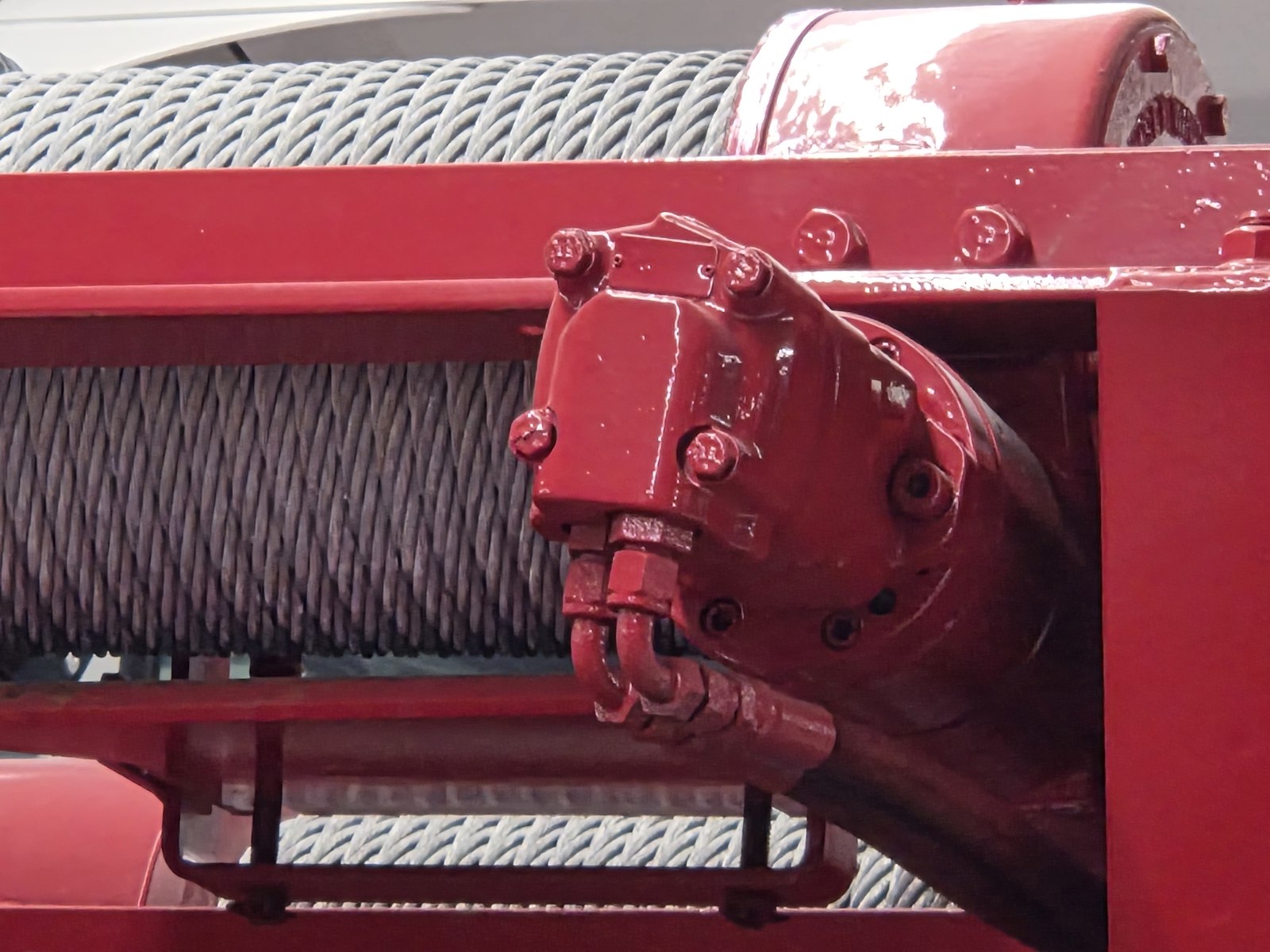
The red winch photograph concentrates on the layers of steel cable wound around a drum. Beside them are a bolted housing, fittings and metal lines. The close view gives these small connections the same attention as the large boom in a wider photograph.
It is the kind of detail that disappears when all the attention stays on the finished vehicle. Here, the drum, housing and mounting frame can be seen together.
Between the booms
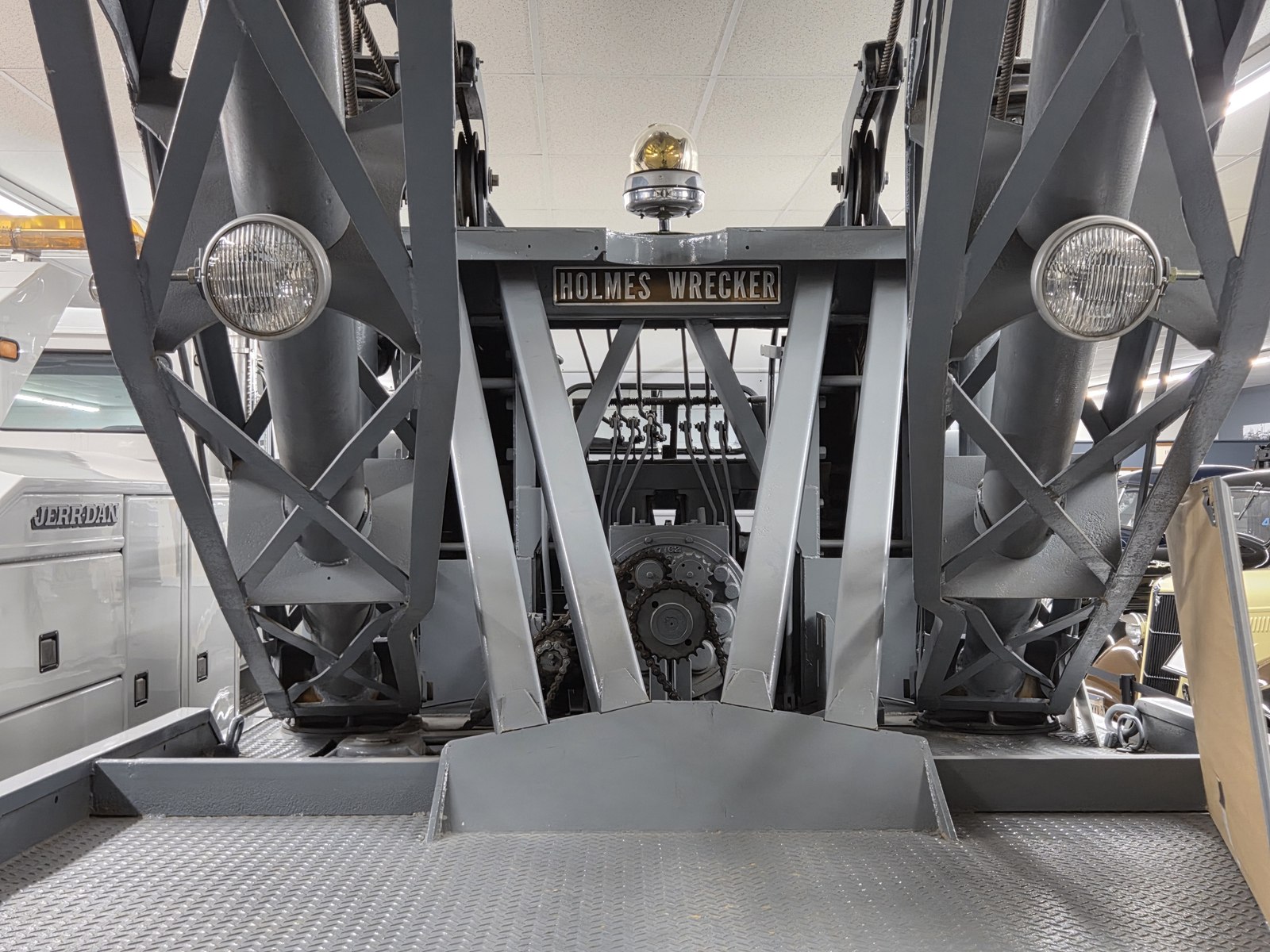
The gray lattice booms frame the Holmes Wrecker nameplate and a pair of round work lights. Below them, the diamond-plate deck leads toward the exposed machinery. The photograph is almost symmetrical, but the cables and connections provide plenty to follow through it.
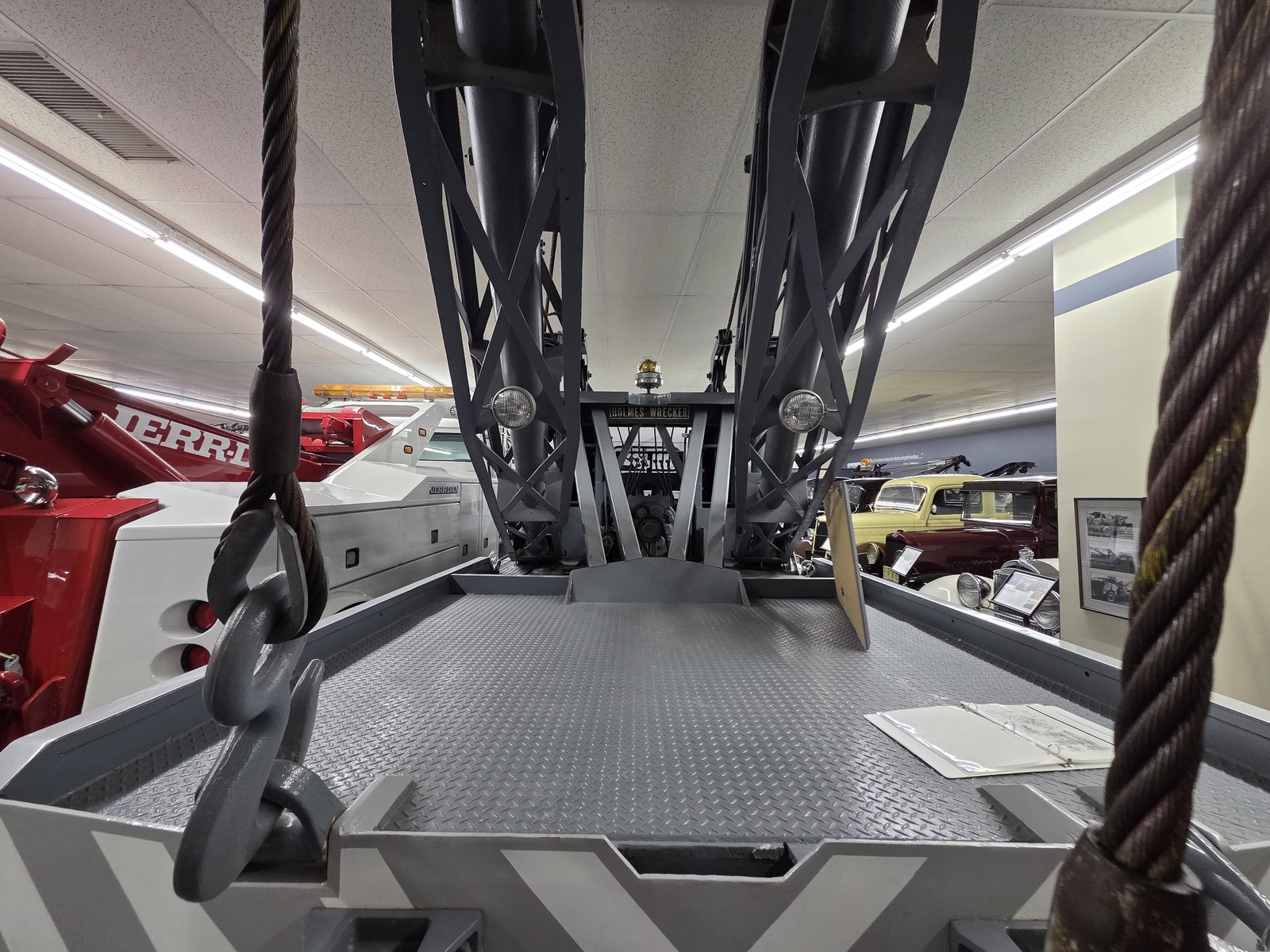
A second angle puts a suspended hook close to the lens. Thick cable runs past the opposite edge of the picture. The hook gives the structure behind it a different sense of scale: the photograph now holds both a large piece of working hardware and the space it occupies on the truck.
That was the value of this stop for me. My note afterward was enthusiastic about learning the industry's history; the photographs preserve the physical details that made it interesting. A museum visit can leave you with both the larger story and a reason to look more closely at the next machine you see.
Photographs from July 19, 2026, with context from my spoken notes after the visit.
Looking along the machinery
One way to spend time with these photographs is to follow a single visible element through each frame. On the older vehicle, trace the cables toward the pulleys overhead. In the winch close-up, look from the wound cable to the housing, bolts and surrounding frame. In the twin-boom views, compare how the hook changes the apparent scale of everything behind it.
This is a visual reading of the displays, rather than an operating guide or a comparison of rated capability. The photographs cannot establish lifting limits or the condition of a machine. They can make the arrangement less abstract: a vehicle body, supports, cable and working hardware become things to inspect together instead of a truck silhouette with a boom above it.
From a cable drum to the people doing the work
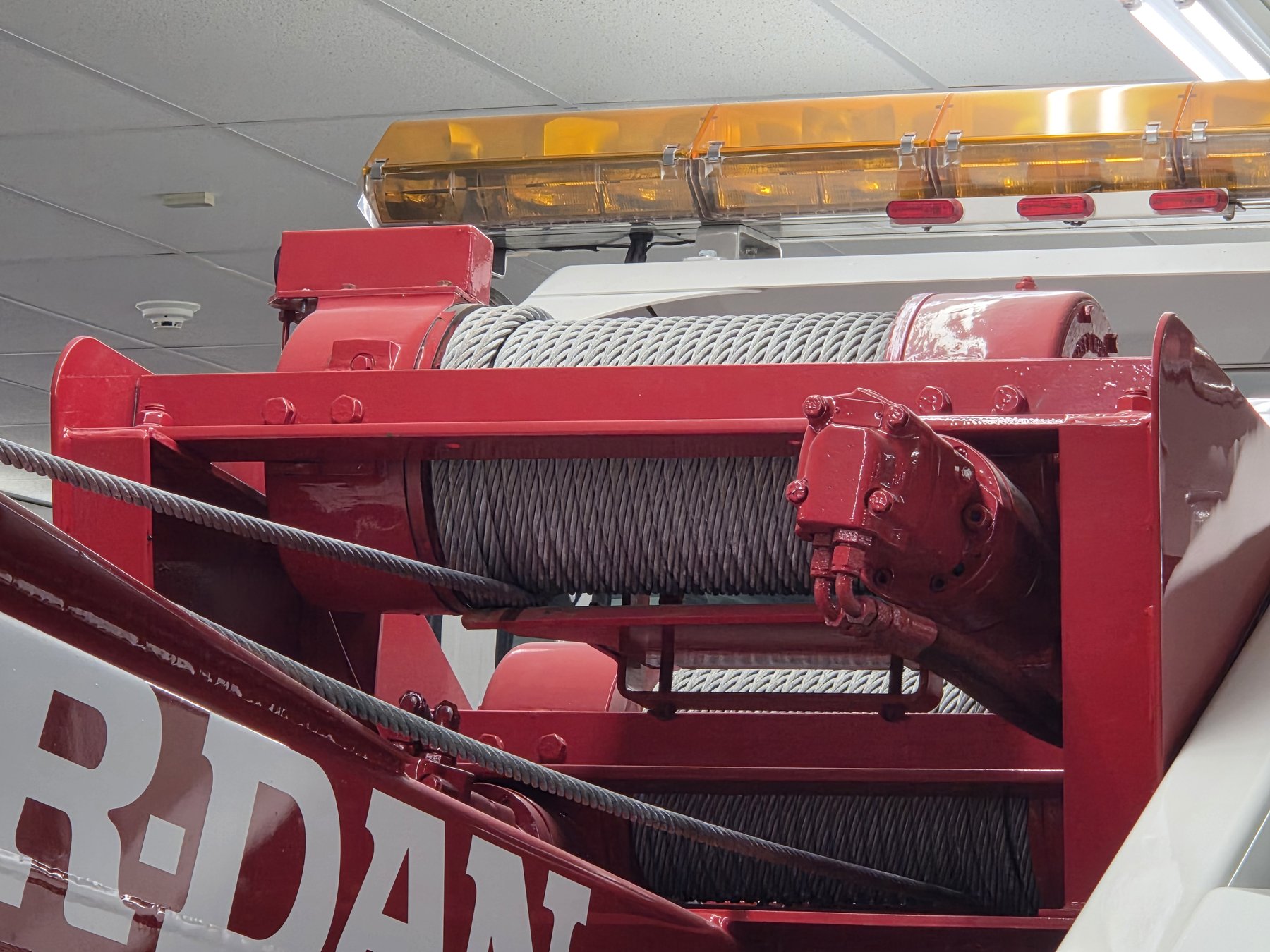
A wider view of the red winch shows how much of the recovery equipment sits behind the cab: the drum, the wound cable, steel framing and the light bar above it. That is a different view from looking only at a truck’s front or its bodywork.
The Makers wall turns from the hardware to the people and companies in the story. Outside, the Wall of the Fallen carries a dedication to those who lost their lives in towing and recovery work. Together, those exhibits put the displayed machines back into a working context.
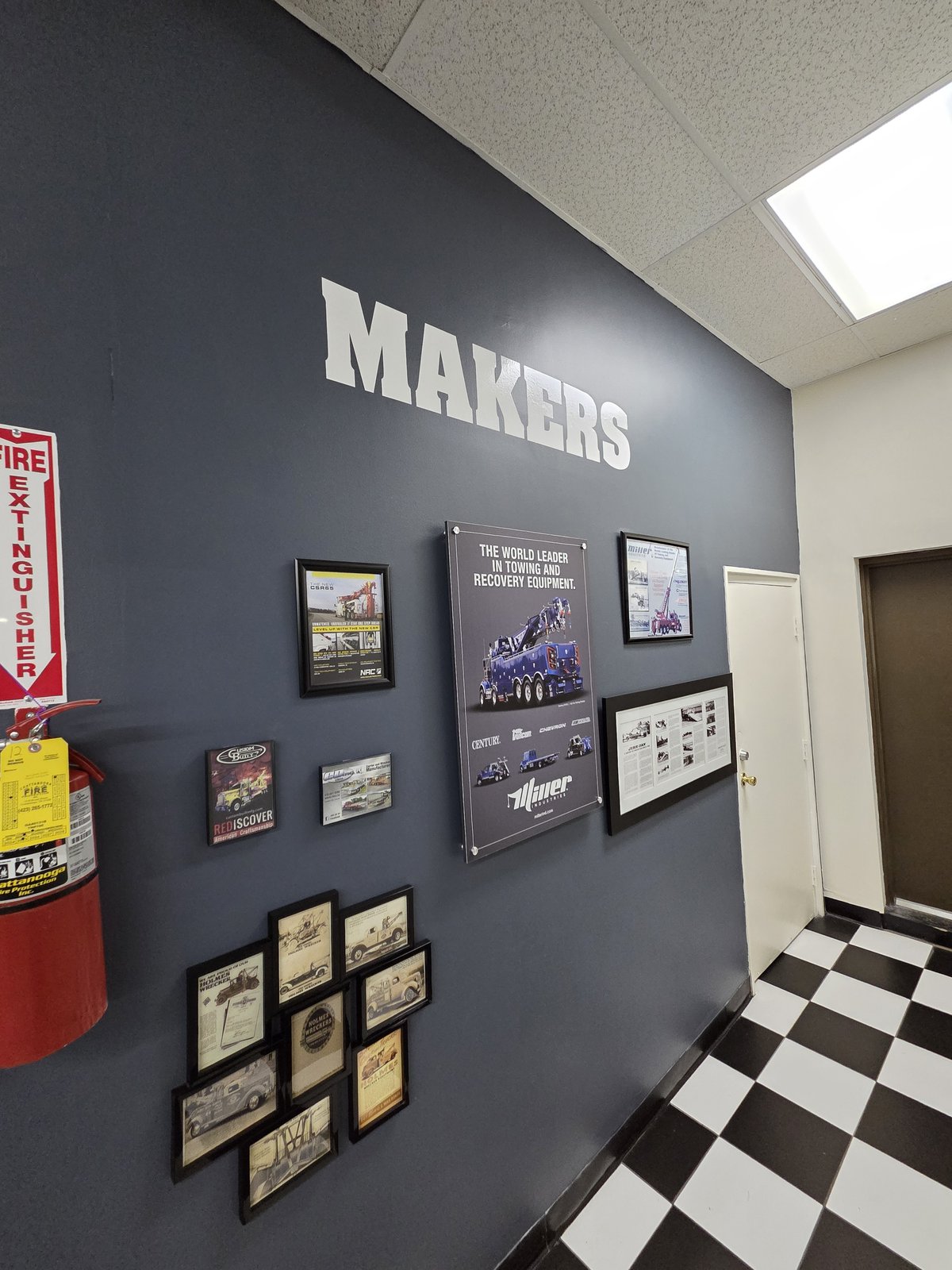
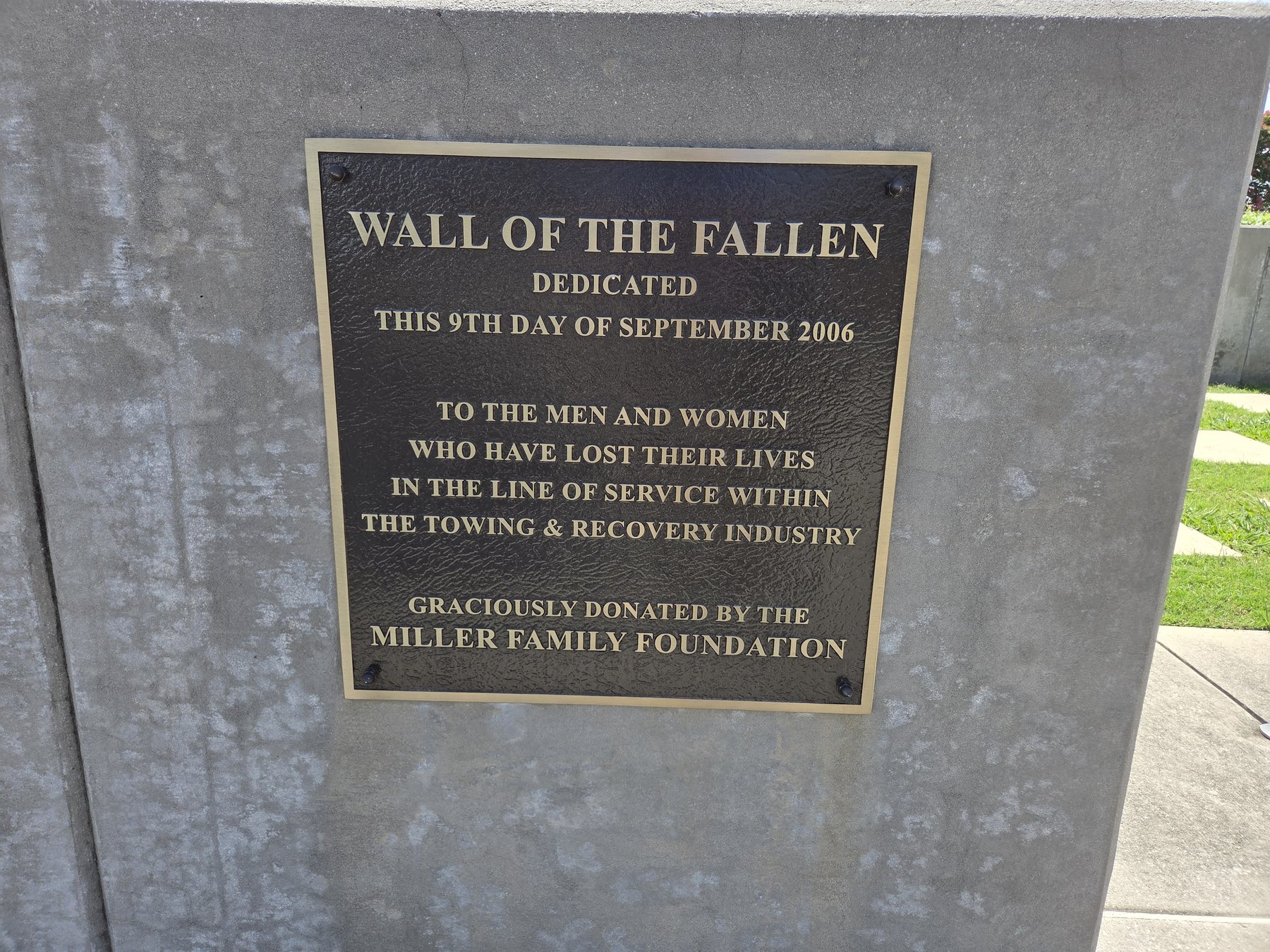
The visit fits into my wider Chattanooga Sunday, but it also holds up as a stop of its own: older trucks, different approaches to lifting and recovery, the close details behind the cabs, and the people associated with the work.
Trip photographs
View trip photo collection →
Chattanooga · 25 photographs